The ozone layer prevents harmful sunlight radiation from entering Earth’s atmosphere. UVB and UVA radiation can magnify the risks of skin cancer.
Early Observations
Chlorine atoms that are released when CFCs reach the stratosphere destroy the ozone.
Scientist reports lead to the United States and most Scandinavian countries banning CFCs in spray cans in 1978.
In 1985, the British Atlantic Survey reported that there was a 50% reduction in ozone levels at Antarctica.
Study Tip
The ozone layer prevents harmful sunlight radiation from entering Earth’s atmosphere. UVB and UVA radiation can magnify the risks of skin cancer.
The Montreal Protocol
Soon after the British Atlantic Survey was published, all nations ratified the Montreal Protocol, which controls the production and phasing out of chemicals that damage the ozone layer.
Efforts are made to eliminate CFCs and other hazardous substances from developed nations first, and then by developing nations a decade later.
Wealthy nations are required to help donate money to researching cleaner alternatives.
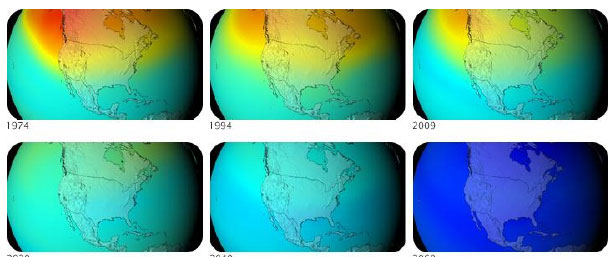
Models predict what ozone levels would have been if CFCs are not being phased out. Warmer colors indicate more ozone.
The Future of Ozone Protection
CFCs take a long time to break down once they enter the atmosphere.
Phasing out chemicals is a gradual process, and the ozone cannot be restored to healthier levels without many years of effort.