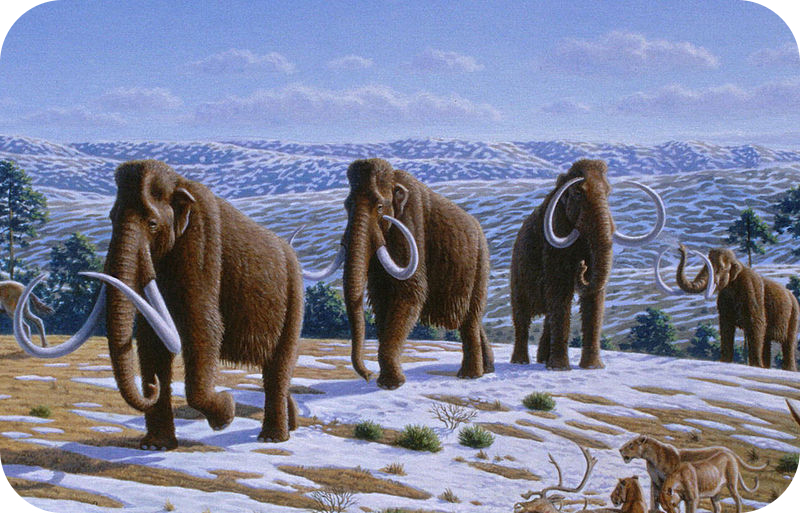
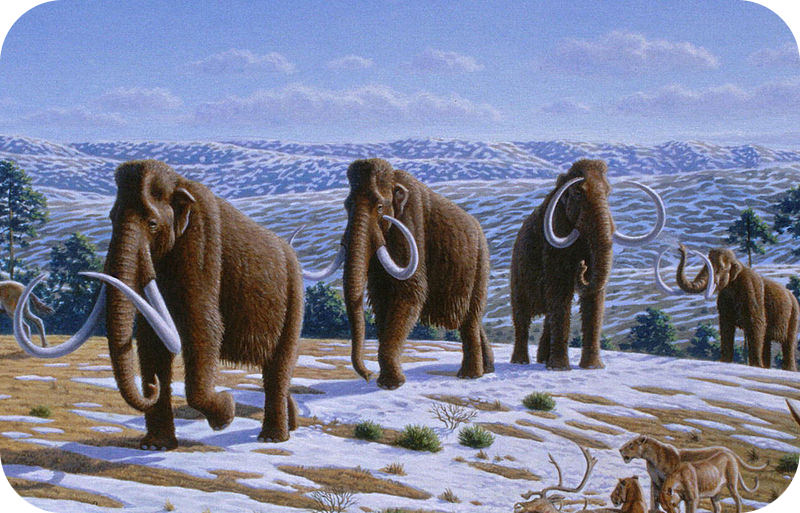
A smaller surface area-to-volume ratio is better for keeping warm, so many ice age mammals were huge. Although the dominant animals were mammals, you might not recognize the Pleistocene Earth any more than the Mesozoic Earth.
Cenozoic Life
The extinction of so many species at the end of the Mesozoic again left many niches available to be filled. Although we call the Cenozoic the age of mammals, birds are more common and more diverse. Early in the era, terrestrial crocodiles lumbered around along with large, primitive mammals and prehistoric birds.
Diversification of the Mammals
Their adaptations have allowed mammals to spread to even more environments than reptiles. The success of mammals is due to several of their unique traits. Mammals are endothermic and have fur, hair, or blubber for warmth. Mammals can swim, fly, and live in nearly all terrestrial environments. Mammals initially filled the forests that covered many early Cenozoic lands. Over time, the forests gave way to grasslands, which created more niches for mammals to fill.
Pleistocene Megafauna
As climate cooled during the ice ages, large mammals were able to stand the cold weather, so many interesting megafauna developed. These included giant sloths, saber-toothed cats, wooly mammoths, giant condors, and many other animals that are now extinct (Figurebelow).
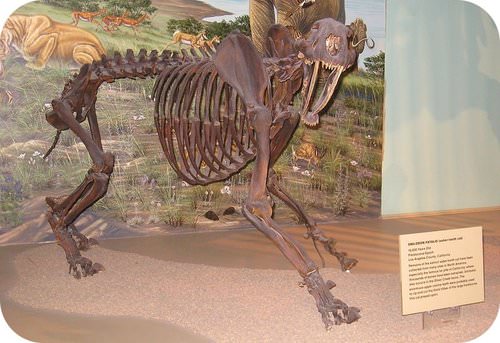
The saber-toothed cat lived during the Pleistocene.
Many of the organisms that made up the Pleistocene megafauna went extinct as conditions warmed. Some may have been driven to extinction by human activities.
Imagine a vast grassy plain covered with herds of elephants, bison and camels stretching as far as the eye can see. Lions, tigers, wolves and later, humans, hunt the herds on their summer migration. This was the San Francisco Bay Area at the close of the last Ice Age.
Summary
With the extinction of the dinosaurs, mammals diversified and took over the available niches.
Many of the organisms of the Pleistocene were enormous, probably in have a low surface area to body ratio.
Many of the Pleistocene megafauna have gone extinct but some remain.
Review
What are the Pleistocene megafauna and why were they so large?
What characteristics do mammals have that allow them to fill so many niches?
How does climate affect evolution? How about climate change?
Explore More
Use this resource to answer the questions that follow.
What are the characteristics of the Clovis spear points?
What does Paul Martin suggest caused the extinction of the Pleistocene megafauna? What else could have been the cause?
What happened to the environment at the end of the Pleistocene?
Why do we still have megafauna in Africa, but the megafauna in North America is largely extinct?
What happened in Australia?
What is the evidence that the extinctions in North America were caused by a combination of humans and climate change?
Resources
Notes/Highlights
Color
Highlighted Text
Notes
Please Sign In to create your own Highlights / Notes


 FlexiA FREE Digital Tutor for Every Student
 FlexBooks 2.0Customizable, digital textbooks in a new, interactive platform
 FlexBooksCustomizable, digital textbooks
 SchoolsFlexBooks from schools and districts near you
 Study GuidesQuick review with key information for each concept
 Adaptive PracticeBuilding knowledge at each student’s skill level
 SimulationsInteractive Physics & Chemistry Simulations
 PLIXPlay. Learn. Interact. eXplore.
 CCSS MathConcepts and FlexBooks aligned to Common Core
 NGSSConcepts aligned to Next Generation Science Standards
 Certified EducatorStand out as an educator. Become CK-12 Certified.
 WebinarsLive and archived sessions to learn about CK-12