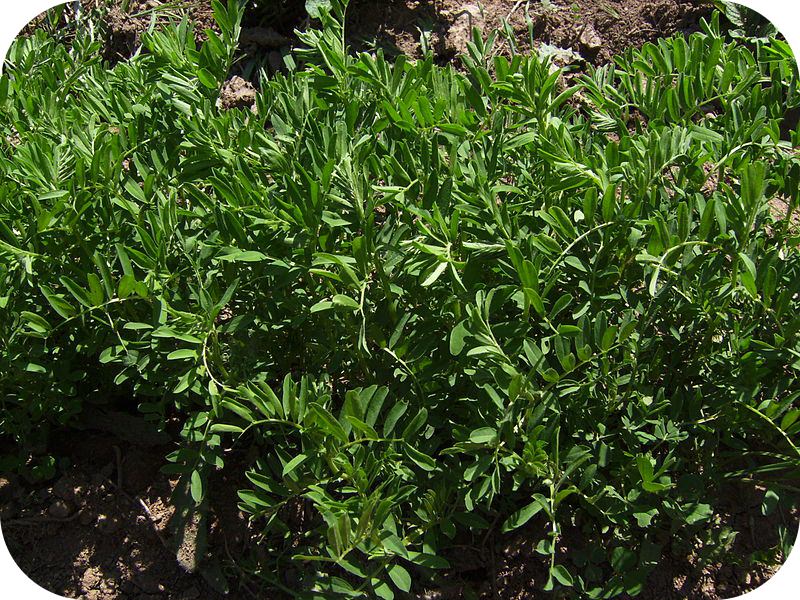
Why are legumes important to biological cycles? Nitrogen gas, as found in the atmosphere, is not useful to organisms. Legumes have bacteria in their root nodules that fix nitrogen. Putting legumes into a crop rotation reduces fertilizer costs and makes the soil and the crops healthier.
Nitrogen as a Nutrient
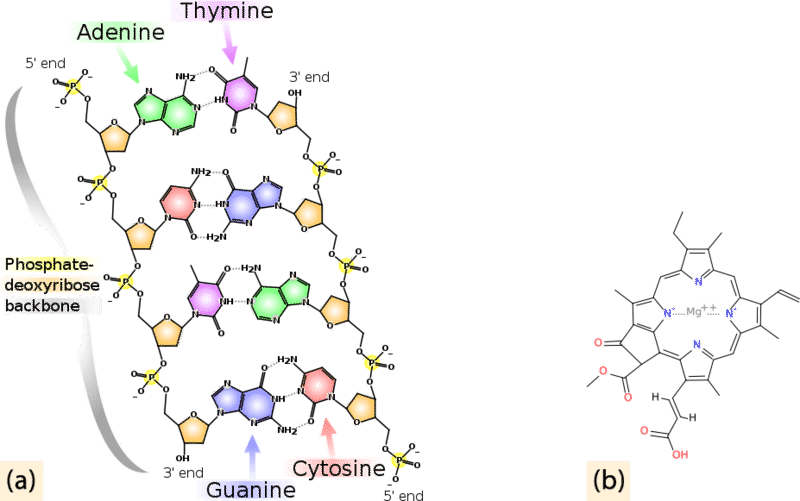
Nitrogen (N2) is vital for life on Earth as an essential component of organic materials, such as amino acids, chlorophyll, and nucleic acids such as DNA and RNA (Figurebelow). Chlorophyll molecules, essential for photosynthesis, contain nitrogen.
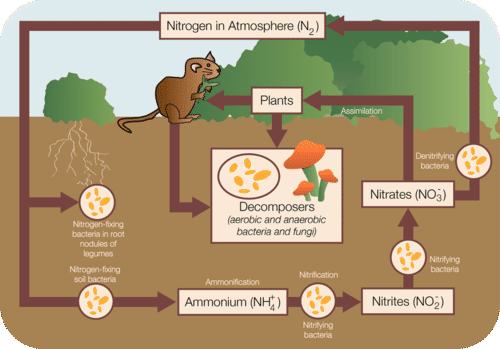
Although nitrogen is the most abundant gas in the atmosphere, it is not in a form that plants can use. To be useful, nitrogen must be “fixed,” or converted into a more useful form. Although some nitrogen is fixed by lightning or blue-green algae, much is modified by bacteria in the soil. These bacteria combine the nitrogen with oxygen or hydrogen to create nitrates or ammonia (Figurebelow).
The nitrogen cycle.
Nitrogen-fixing bacteria either live free or in a symbiotic relationship with leguminous plants (peas, beans, peanuts). The symbiotic bacteria use carbohydrates from the plant to produce ammonia that is useful to the plant. Plants use this fixed nitrogen to build amino acids, nucleic acids (DNA, RNA), and chlorophyll. When these legumes die, the fixed nitrogen they contain fertilizes the soil.
Up the Food Chain
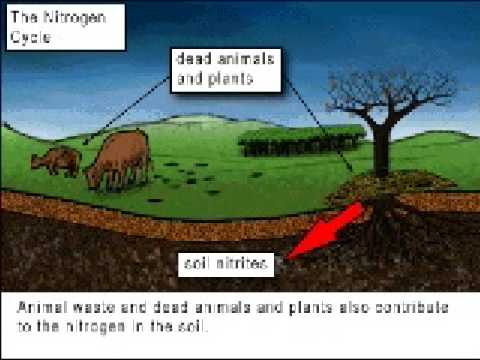
Animals eat plant tissue and create animal tissue. After a plant or animal dies or an animal excretes waste, bacteria and some fungi in the soil fix the organic nitrogen and return it to the soil as ammonia. Nitrifying bacteria oxidize the ammonia to nitrites, while other bacteria oxidize the nitrites to nitrates, which can be used by the next generation of plants. In this way, nitrogen does not need to return to a gas. Under conditions when there is no oxygen, some bacteria can reduce nitrates to molecular nitrogen.
Summary
Nitrogen is an essential component of many organic molecules.
Nitrogen is fixed when it is changed into a form that organisms can use.
Bacteria and some fungi fix organic nitrogen into ammonia and nitrifying bacteria oxidize it to nitrates.
Review
What do soil bacteria do with nitrogen?
Why are legumes important as nitrogen fixers?
Why do organisms need nitrogen?
Explore More
Use this resource (watch up to 5:15) to answer the questions that follow.
How much nitrogen are animals? How much phosphorous?
What do animals use nitrogen for?
Why is nitrogen gas impossible for us to use for the nitrogen we need?
Which organisms can change the nitrogen into a form that we can use? What is this process called?
Where do these bacteria live? What do they create?
What do nitrifying bacteria do?
What would life on Earth be like without these two types of bacteria?
What else can break nitrogen apart?
What do denitrifying bacteria do?
Resources
Notes/Highlights
Color
Highlighted Text
Notes
Please Sign In to create your own Highlights / Notes

 FlexiA FREE Digital Tutor for Every Student
 FlexBooks 2.0Customizable, digital textbooks in a new, interactive platform
 FlexBooksCustomizable, digital textbooks
 SchoolsFlexBooks from schools and districts near you
 Study GuidesQuick review with key information for each concept
 Adaptive PracticeBuilding knowledge at each student’s skill level
 SimulationsInteractive Physics & Chemistry Simulations
 PLIXPlay. Learn. Interact. eXplore.
 CCSS MathConcepts and FlexBooks aligned to Common Core
 NGSSConcepts aligned to Next Generation Science Standards
 Certified EducatorStand out as an educator. Become CK-12 Certified.
 WebinarsLive and archived sessions to learn about CK-12