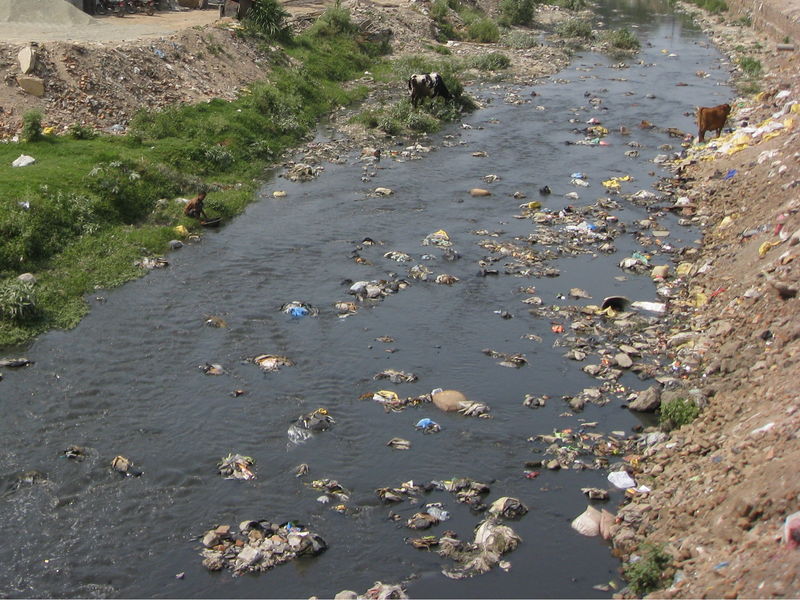
Is polluted water like this only seen in developing nations?
There is certainly polluted water in developed nations, but that water is cleaned and purified before it is put in taps and sent to people's homes. Pollutants come from a variety of sources. Freshwater and ocean pollution are serious global problems that affect the availability of safe drinking water, human health, and the environment. Waterborne diseases from water pollution kill millions of people in underdeveloped countries every year.
Sources of Water Pollution
Water pollution contributes to water shortages by making some water sources unavailable for use. In underdeveloped countries, raw sewage is dumped into the same water that people drink and bathe in. Even in developed countries, water pollution affects human and environmental health.
Water pollution includes any contaminant that gets into lakes, streams, and oceans. The most widespread source of water contamination in developing countries is raw sewage. In developed countries, the three main sources of water pollution are described below.
Municipal Pollution
Wastewater from cities and towns contains many different contaminants from many different homes, businesses, and industries (Figurebelow). Contaminants come from:
Sewage disposal (some sewage is inadequately treated or untreated).
Storm drains.
Septic tanks (sewage from homes).
Boats that dump sewage.
Yard runoff (fertilizer and herbicide waste).
Municipal and agricultural pollution.
Large numbers of sewage spills into San Francisco Bay are forcing cities, water agencies and the public to take a closer look at wastewater and its impacts on the health of the bay. QUEST investigates the causes of the spills and what's being done to prevent them.
Industrial Pollution
Factories and hospitals spew pollutants into the air and waterways (Figurebelow). Some of the most hazardous industrial pollutants include:
Radioactive substances from nuclear power plants and medical and scientific sources.
Heavy metals, organic toxins, oils, and solids in industrial waste.
Chemicals, such as sulfur, from burning fossil fuels.
Oil and other petroleum products from supertanker spills and offshore drilling accidents.
Heated water from industrial processes, such as power stations.
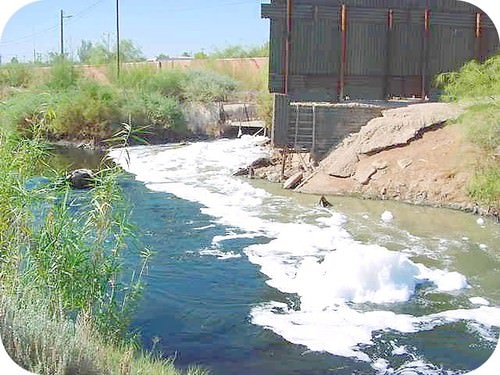
Industrial Waste Water: Polluted water coming from a factory in Mexico. The different colors of foam indicate various chemicals in the water and industrial pollution.
Agricultural Pollution
Runoff from crops, livestock, and poultry farming carries contaminants such as fertilizers, pesticides, and animal waste into nearby waterways (Figurebelow). Soil and silt also run off farms. Animal wastes may carry harmful diseases, particularly in the developing world.
The high density of animals in a factory farm means that runoff from the area is full of pollutants.
Fertilizers that run off of lawns and farm fields are extremely harmful to the environment. Nutrients, such as nitrates, in the fertilizer promote algae growth in the water they flow into. With the excess nutrients, lakes, rivers, and bays become clogged with algae and aquatic plants. Eventually these organisms die and decompose. Decomposition uses up all the dissolved oxygen in the water. Without oxygen, large numbers of plants, fish, and bottom-dwelling animals die.
Summary
Municipal pollution comes from sewage, storm drains, septic tanks, boats, and runoff from yards.
Industrial pollution, from factories and hospitals, includes radioactive substances; heavy metals and other pollutants in industrial waste; by-products of fossil fuel burning; oil and other petroleum products; and heat from factories and power plants.
Agricultural pollutants include wastes from animals, pesticides, herbicides, fertilizers, and soil.
Review
How can fertilizers, which help things grow, be pollutants?
Why is raw sewage a major pollutant in some countries but not in developed countries?
How could heat be a pollutant? What damage could it cause?
Explore More
Use this resource to answer the questions that follow.
What is an example of point source pollution?
What is our biggest threat to clean water, at least in Indiana?
What are the common pollutants carried in non-source pollution?
Why does non-point source pollution have the greatest impact on water quality?
How does non-point source pollution end up in our water sources?
What are some of the common causes of non-point source pollution?
Resources
Notes/Highlights
Color
Highlighted Text
Notes
Please Sign In to create your own Highlights / Notes


 FlexiA FREE Digital Tutor for Every Student
 FlexBooks 2.0Customizable, digital textbooks in a new, interactive platform
 FlexBooksCustomizable, digital textbooks
 SchoolsFlexBooks from schools and districts near you
 Study GuidesQuick review with key information for each concept
 Adaptive PracticeBuilding knowledge at each student’s skill level
 SimulationsInteractive Physics & Chemistry Simulations
 PLIXPlay. Learn. Interact. eXplore.
 CCSS MathConcepts and FlexBooks aligned to Common Core
 NGSSConcepts aligned to Next Generation Science Standards
 Certified EducatorStand out as an educator. Become CK-12 Certified.
 WebinarsLive and archived sessions to learn about CK-12