The watt. This SI unit is named after James Watt. As for all SI units whose names are derived from the proper name of a person, the first letter of its symbol is uppercase (W). But when an SI unit is spelled out, it should always be written in lowercase (watt), with the exception of the “degree Celsius.”
from wikipedia
SI stands for Système Internationale. SI units are the ones that all engineers should use, to avoid losing spacecraft.
SI units
energy
one joule
1J
power
one watt
1W
force
one newton
1N
length
one metre
1m
time
one second
1s
temperature
one kelvin
1K
prefix
kilo
mega
giga
tera
peta
exa
symbol
k
M
G
T
P
E
factor
103
106
109
1012
1015
1018
prefix
centi
milli
micro
nano
pico
femto
symbol
c
m
μ
n
p
f
factor
10−2
10−3
10−6
10−9
10−12
10−15
SI units and prefixes
My preferred units for energy, power, and transport efficiencies
My preferred units, expressed in SI
energy
one kilowatt-hour
1 kWh
3600000 J
power
one kilowatt-hour per day
1 kWh/d
(100024)W≃40W
force
one kilowatt-hour per 100 km
1 kWh/100 km
36N
time
one hour
1h
3600s
one day
1d
24×3600s≃105s
one year
1y
365.25×24×3600s≃π×107s
force per mass
kilowatt-hour per ton-kilometre
1 kWh/t-km
3.6m/s2(≃0.37g)
Additional units and symbols
Thing measured
unit name
symbol
value
humans
person
p
mass
ton
t
1t=1000kg
gigaton
Gt
1Gt=109×1000kg=1Pg
transport
person-kilometre
p-km
transport
ton-kilometre
t-km
volume
litre
l
1l=0.001m3
area
square kilometre
sq km, km2
1sqkm=106m2
hectare
ha
1ha=104m2
Wales
1Wales=21000km2
London (Greater London)
1London=1580km2
energy
Dinorwig
1Dinorwig=9GWh
Billions, millions, and other people’s prefixes
Throughout this book “a billion” (1 bn) means a standard American billion, that is, 109, or a thousand million. A trillion is 1012. The standard prefix meaning “billion” (109) is “giga.”
In continental Europe, the abbreviations Mio and Mrd denote a million and billion respectively. Mrd is short for milliard, which means 109.
The abbreviation m is often used to mean million, but this abbreviation is incompatible with the SI – think of mg (milligram) for example. So I don’t use m to mean million. Where some people use m, I replace it by M. For example, I use Mtoe for million tons of oil equivalent, and MtCO2 for million tons of CO2.
Annoying units
There’s a whole bunch of commonly used units that are annoying for various reasons. I’ve figured out what some of them mean. I list them here, to help you translate the media stories you read.
Homes
The “home” is commonly used when describing the power of renewable facilities. For example, “The £300 million Whitelee wind farm’s 140 turbines will generate 322 MW – enough to power 200000 homes.” The “home” is defined by the BritishWind Energy Association to be a power of 4700 kWh per year [www.bwea.com/ukwed/operational.asp]. That’s 0.54 kW, or 13 kWh per day. (A few other organizations use 4000 kWh/y per household.)
The “home” annoys me because I worry that people confuse it with the total power consumption of the occupants of a home – but the latter is actually about 24 times bigger. The “home” covers the average domestic electricity consumption of a household, only. Not the household’s home heating. Nor their workplace. Nor their transport. Nor all the energy-consuming things that society does for them.
Incidentally, when they talk of the CO2 emissions of a “home,” the official exchange rate appears to be 4 tons CO2 per home per year.
Power stations
Energy saving ideas are sometimes described in terms of power stations. For example according to a BBC report on putting new everlasting LED lightbulbs in traffic lights, “The power savings would be huge – keeping the UK’s traffic lights running requires the equivalent of two medium-sized power stations.” news.bbc.co.uk/1/low/sci/tech/specials/sheffield_99/449368.stm
What is a medium-sized power station? 10 MW? 50 MW? 100 MW? 500 MW? I don’t have a clue. A google search indicates that some people think it’s 30 MW, some 250 MW, some 500 MW (the most common choice), and some 800 MW. What a useless unit!
Surely it would be clearer for the article about traffic lights to express what it’s saying as a percentage? “Keeping the UK’s traffic lights running requires 11 MW of electricity, which is 0.03% of the UK’s electricity.” This would reveal how “huge” the power savings are.
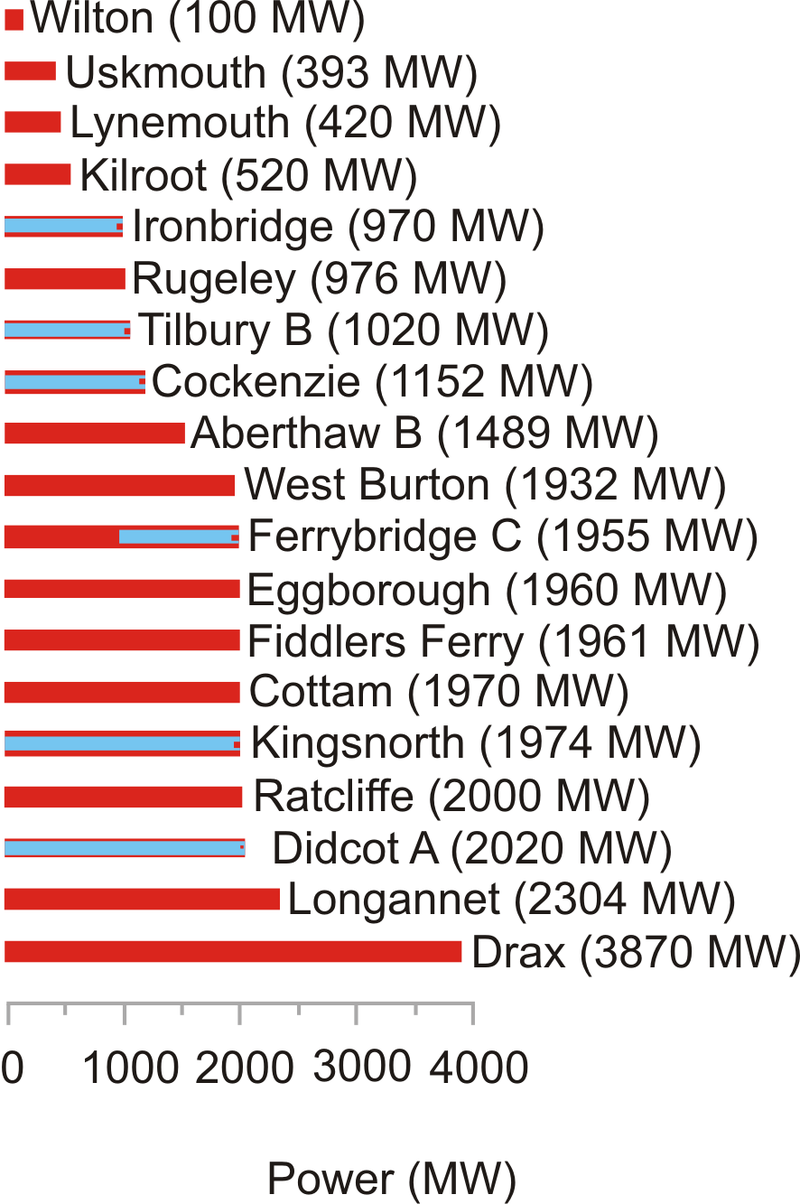
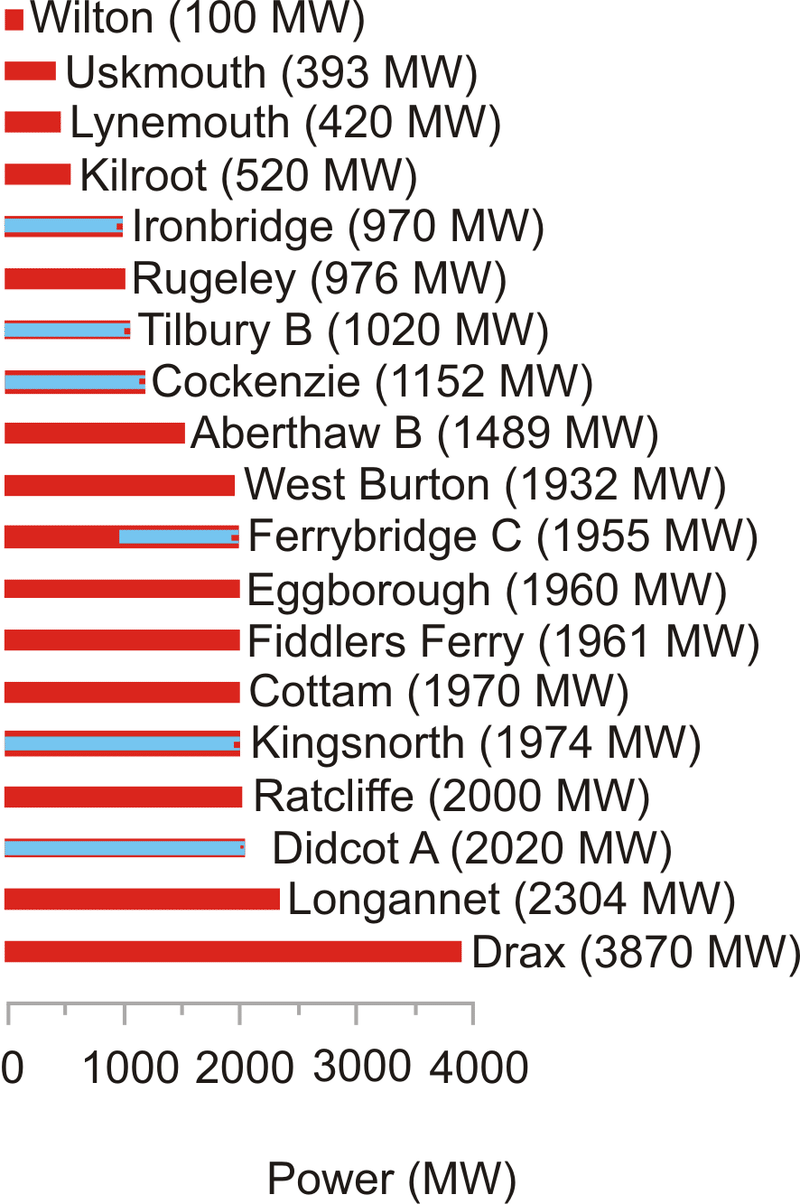
Figure I.2 shows the powers of the UK’s 19 coal power stations.
Figure I.2: Powers of Britain’s coal power stations. I’ve highlighted in blue 8 GW of generating capacity that will close by 2015. 2500 MW, shared across Britain, is the same as 1 kWh per day per person.
Cars taken off the road
Some advertisements describe reductions in CO2 pollution in terms of the “equivalent number of cars taken off the road.” For example, Richard Branson says that if Virgin Trains’ Voyager fleet switched to 20% biodiesel – incidentally, don’t you feel it’s outrageous to call a train a “green biodiesel-powered train” when it runs on 80% fossil fuels and just 20% biodiesel? – sorry, I got distracted. Richard Branson says that if Virgin Trains’ Voyager fleet switched to 20% biodiesel – I emphasize the “if” because people like Beardie are always getting media publicity for announcing that they are thinking of doing good things, but some of these fanfared initiatives are later quietly cancelled, such as the idea of towing aircraft around airports to make them greener – sorry, I got distracted again. Richard Branson says that if Virgin Trains’ Voyager fleet switched to 20% biodiesel, then there would be a reduction of 34 500 tons of CO2 per year, which is equivalent to “23000 cars taken off the road.” This statement reveals the exchange rate:
“one car taken off the road”⟷−1.5tons per year ofCO2.
Calories
The calorie is annoying because the diet community call a kilocalorie a Calorie. 1 such food Calorie = 1000 calories.
2500kcal=3kWh=10000kJ=10MJ.
Barrels
An annoying unit loved by the oil community, along with the ton of oil. Why can’t they stick to one unit? A barrel of oil is 6.1 GJ or 1700 kWh.
Barrels are doubly annoying because there are multiple definitions of barrels, all having different volumes.
Here’s everything you need to know about barrels of oil. One barrel is 42 U.S. gallons, or 159 litres. One barrel of oil is 0.1364 tons of oil. One barrel of crude oil has an energy of 5.75 GJ. One barrel of oil weighs 136 kg. One ton of crude oil is 7.33 barrels and 42.1 GJ. The carbon-pollution rate of crude oil is 400 kg of CO2 per barrel. www.chemlink.com.au/conversions.htm. This means that when the price of oil is $100 per barrel, oil energy costs 6 per kWh. If there were a carbon tax of $250 per ton of CO2 on fossil fuels, that tax would increase the price of a barrel of oil by $100.
Gallons
The gallon would be a fine human-friendly unit, except the Yanks messed it up by defining the gallon differently from everyone else, as they did the pint and the quart. The US volumes are all roughly five-sixths of the correct volumes.
Tons are annoying because there are short tons, long tons and metric tons. They are close enough that I don’t bother distinguishing between them. 1 short ton (2000 lb) = 907 kg; 1 long ton (2240 lb) = 1016 kg; 1 metric ton (or tonne) = 1000 kg.
BTU and quads
British thermal units are annoying because they are neither part of the Système Internationale, nor are they of a useful size. Like the useless joule, they are too small, so you have to roll out silly prefixes like “quadrillion” (1015) to make practical use of them.
1 kJ is 0.947 BTU. 1 kWh is 3409 BTU.
A “quad” is 1 quadrillion BTU = 293 TWh.
Funny units
Cups of tea
Is this a way to make solar panels sound good? “Once all the 7000 photovoltaic panels are in place, it is expected that the solar panels will create 180000 units of renewable electricity each year – enough energy to make nine million cups of tea.” This announcement thus equates 1 kWh to 50 cups of tea.
As a unit of volume, 1 US cup (half a US pint) is officially 0.24 l; but a cup of tea or coffee is usually about 0.18 l. To raise 50 cups of water, at 0.18 l per cup, from 15∘C to 100∘C requires 1 kWh.
So “nine million cups of tea per year” is another way of saying “20 kW.”
Double-decker buses, Albert Halls and Wembley stadiums
“If everyone in the UK that could, installed cavity wall insulation, we could cut carbon dioxide emissions by a huge 7 million tons. That’s enough carbon dioxide to fill nearly 40 million double-decker buses or fill the new Wembley stadium 900 times!”
From which we learn the helpful fact that one Wembley is 44000 double decker buses. Actually, Wembley’s bowl has a volume of 1140000m3.
“If every household installed just one energy saving light bulb, there would be enough carbon dioxide saved to fill the Royal Albert Hall 1,980 times!” (An Albert Hall is 100000m3.)
Expressing amounts of CO2 by volume rather than mass is a great way to make them sound big. Should “1 kg of CO2 per day” sound too small, just say “200000 litres of CO2 per year”!
mass of CO2↔ volume
2kgCO2↔1m3
1kgCO2↔500litres
44gCO2↔22litres
2gCO2↔1litre
Volume-to-mass conversion
More volumes
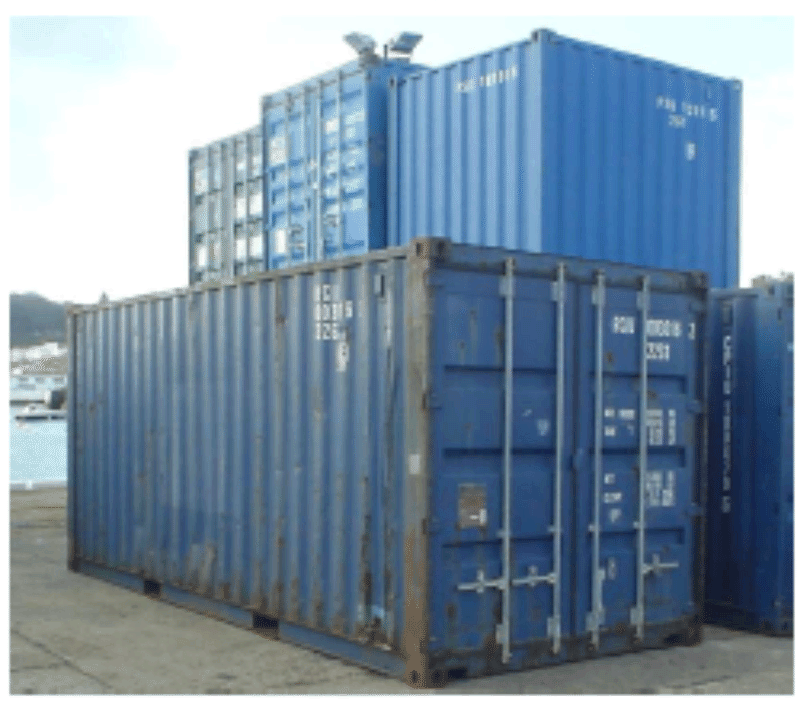
A container is 2.4m wide by 2.6m high by (6.1 or 12.2) metres long (for the TEU and FEU respectively).
One TEU is the size of a small 20-foot container – an interior volume of about 33m3. Most containers you see today are 40-foot containers with a size of 2 TEU. A 40-foot container weighs 4 tons and can carry 26 tons of stuff; its volume is 67.5m3.
A swimming pool has a volume of about 3000m3.
One double decker bus has a volume of 100m3.
One hot air balloon is 2500m3.
The great pyramid at Giza has a volume of 2500000 cubic metres.
Figure I.4:A twenty-foot container (1 TEU).
Areas
The area of the earth’s surface is 500×106km2; the land area is 150×106km2.
My typical British 3-bedroom house has a floor area of 88m2. In the USA, the average size of a single-family house is 2330 square feet (216m2).
hectare = 104m2
acre = 4050m2
square mile = 2.6km2
square foot = 0.093m2
square yard = 0.84m2
Areas.
Powers
If we add the suffix “e” to a power, this means that we’re explicitly talking about electrical power. So, for example, a power station’s output might be 1 GW(e), while it uses chemical power at a rate of 2.5 GW. Similarly the suffix “th” may be added to indicate that a quantity of energy is thermal energy. The same suffixes can be added to amounts of energy. “My house uses 2 kWh(e) of electricity per day.”
Land use
area per person (m2)
percentage
– domestic buildings
30
1.1
– domestic gardens
114
4.3
– other buildings
18
0.66
– roads
60
2.2
– railways
3.6
0.13
– paths
2.9
0.11
– greenspace
2335
87.5
– water
69
2.6
– other land uses
37
1.4
Total
2670
100
Land areas, in England, devoted to different uses. Source: Generalized Land Use Database Statistics for England 2005. [3b7zdf]
1000BTU per hour1horse power(1hpor1cvor1ps)=0.3kW=7kWh/d=0.75kW=18kWh/d1kW=24kWh/d
1therm1000Btu1MJ1GJ1toe (ton of oil equivalent)1kcal=29.31kWh=0.2931kWh=0.2778kWh=277.8kWh=11630kWh=1.163×10⁻³kWh
How other energy and power units relate to the kilowatt-hour and the kilowatt-hour per day.
If we add a suffix “p” to a power, this indicates that it’s a “peak” power, or capacity. For example, 10m2 of panels might have a power of 1 kWp.
1kWh/d1toe/y=124kW.=1.33kW.
Petrol comes out of a petrol pump at about half a litre per second. So that’s 5 kWh per second, or 18 MW.
The power of a Formula One racing car is 560 kW.
UK electricity consumption is 17 kWh per day per person, or 42.5 GW per UK.
“One ton” of air-conditioning = 3.5 kW.
World power consumption
World power consumption is 15 TW. World electricity consumption is 2 TW.
Useful conversion factors
To change TWh per year to GW, divide by 9.
1 kWh/d per person is the same as 2.5 GW per UK, or 22 TWh/y per UK
To change mpg (miles per UK gallon) to km per litre, divide by 3.
At room temperature, 1kT=140eV
At room temperature, 1kT per molecule = 2.5 kJ/mol.
Meter reading
How to convert your gas-meter reading into kilowatt-hours:
If the meter reads 100s of cubic feet, take the number of units used, and multiply by 32.32 to get the number of kWh.
If the meter reads cubic metres, take the number of units used, and multiply by 11.42 to get the number of kWh.
Calorific values of fuels
Crude oil: 37 MJ/l; 10.3 kWh/l.
Natural gas: 38MJ/m3. (Methane has a density of 1.819 kg/m3.)
1 ton of coal: 29.3 GJ; 8000 kWh.
Fusion energy of ordinary water: 1800 kWh per litre.
See also table.
kWh/t-km
inland water
0.083
rail
0.083
truck
0.75
air
2.8
oil pipeline
0.056
gas pipeline
0.47
int’l water container
0.056
int’l water bulk
0.056
int’l water tanker
0.028
Energy intensity of transport modes in the USA. Source: Weber and Matthews (2008).
Heat capacities
The heat capacity of air is 1kJ/kg/∘C, or 29J/mol/∘C. The density of air is 1.2kg/m3. So the heat capacity of air per unit volume is 1.2kJ/m3/∘C.
Latent heat of vaporization of water: 2257.92 kJ/kg. Water vapour’s heat capacity: 1.87kJ/kg/∘C. Water’s heat capacity is 4.2kJ/l/∘C.
Steam’s density is 0.590kg/m3.
Pressure
Atmospheric pressure: 1bar≃105Pa (pascal). Pressure under 1000m of water: 100 bar. Pressure under 3000m of water: 300 bar.
Money
I assumed the following exchange rates when discussing money: ϵ1=$1.26;£1=$1.85;$1=$1.12 Canadian. These exchange rates were correct in mid-2006.
Greenhouse gas conversion factors
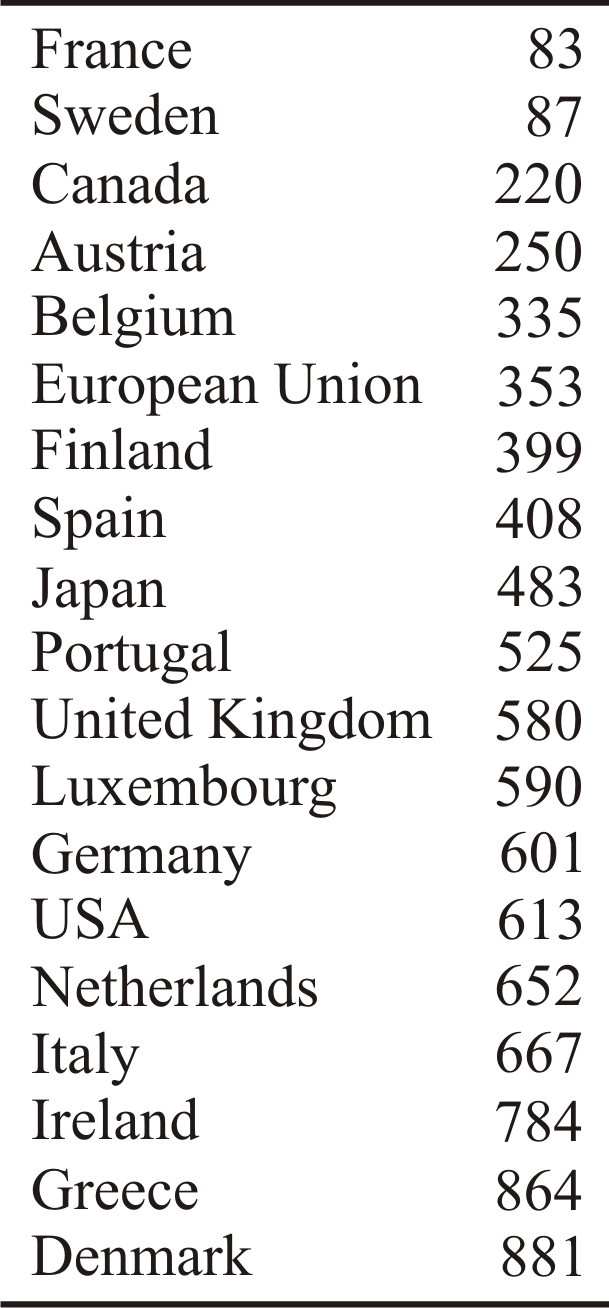
Figure I.9: Carbon intensity of electricity production (gCO2 per kWh of electricity).
Fuel type
emissions (gCO2 per kWh of chemical energy)
natural gas
190
refinery gas
200
ethane
200
LPG
210
jet kerosene
240
petrol
240
gas/diesel oil
250
heavy fuel oil
260
naptha
260
coking coal
300
coal
300
petroleum coke
340
Emissions associated with fuel combustion. Source: DEFRA’s Environmental Reporting Guidelines for Company Reporting on Greenhouse Gas Emissions.
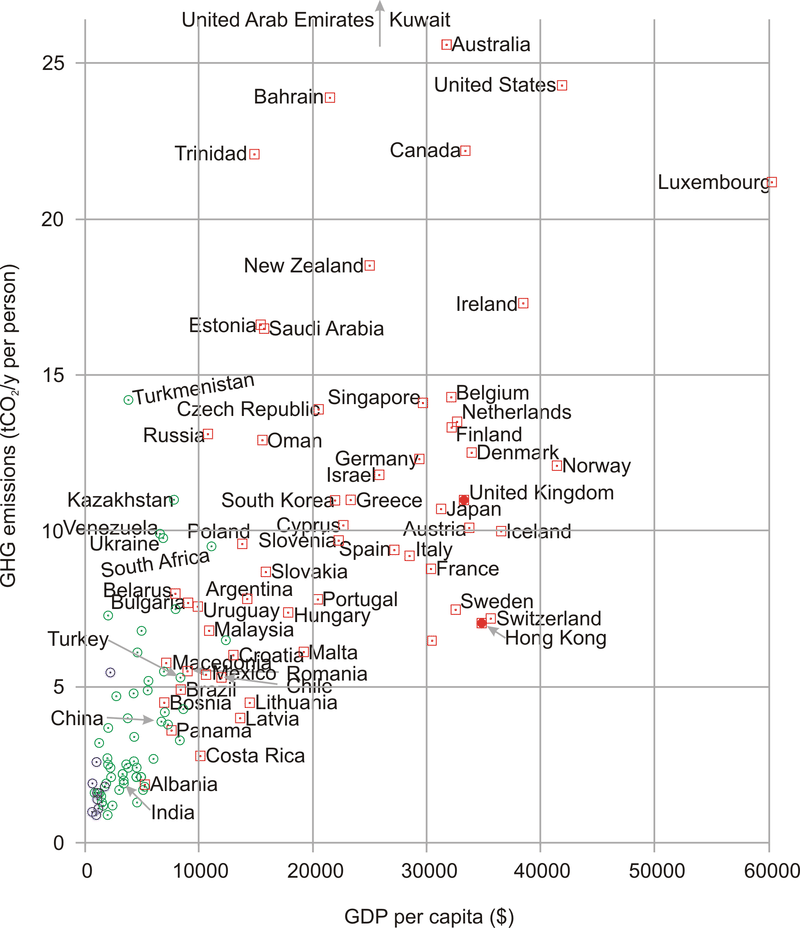
Figure I.11: Greenhouse-gas emissions per capita, versus GDP per capita, in purchasing-power-parity US dollars. Squares show countries having “high human development;” circles, “medium” or “low.” See also figures 30.1 and 18.4. Source: UNDP Human Development Report, 2007.
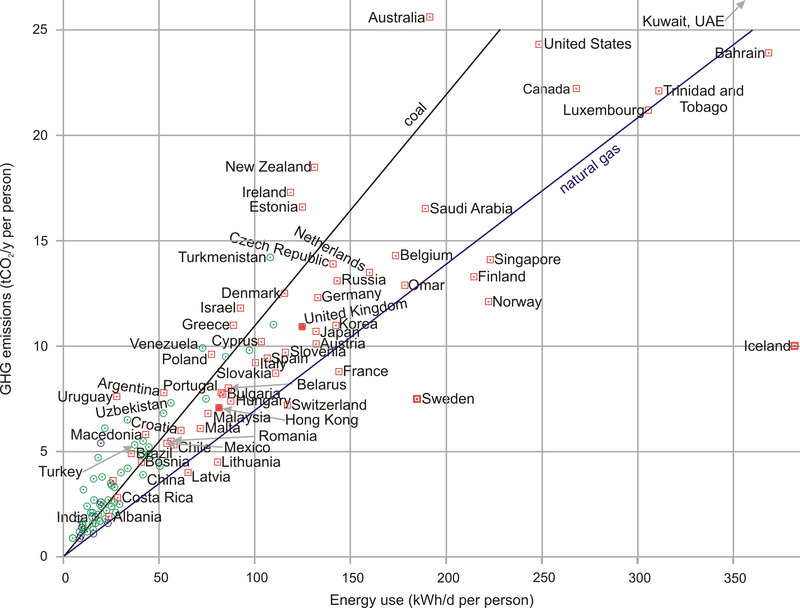
Figure I.12: Greenhouse-gas emissions per capita, versus power consumption per capita. The lines show the emission-intensities of coal and natural gas. Squares show countries having “high human development;” circles, “medium” or “low.” See also figures 30.1 and 18.4. Source: UNDP Human Development Report, 2007.
NOTES / HIGHLIGHTS
Please Sign In to create your own Highlights / Notes
Notes/Highlights
Color
Highlighted Text
Notes
Please Sign In to create your own Highlights / Notes
Currently there are no resources to be displayed.
Description
This book explores six strategies for eliminating the gap between consumption and renewable production.


 FlexiA FREE Digital Tutor for Every Student
 FlexBooks 2.0Customizable, digital textbooks in a new, interactive platform
 FlexBooksCustomizable, digital textbooks
 SchoolsFlexBooks from schools and districts near you
 Study GuidesQuick review with key information for each concept
 Adaptive PracticeBuilding knowledge at each student’s skill level
 SimulationsInteractive Physics & Chemistry Simulations
 PLIXPlay. Learn. Interact. eXplore.
 CCSS MathConcepts and FlexBooks aligned to Common Core
 NGSSConcepts aligned to Next Generation Science Standards
 Certified EducatorStand out as an educator. Become CK-12 Certified.
 WebinarsLive and archived sessions to learn about CK-12