



Main Sequence Star Lives
Lesson
What do most stars look like?
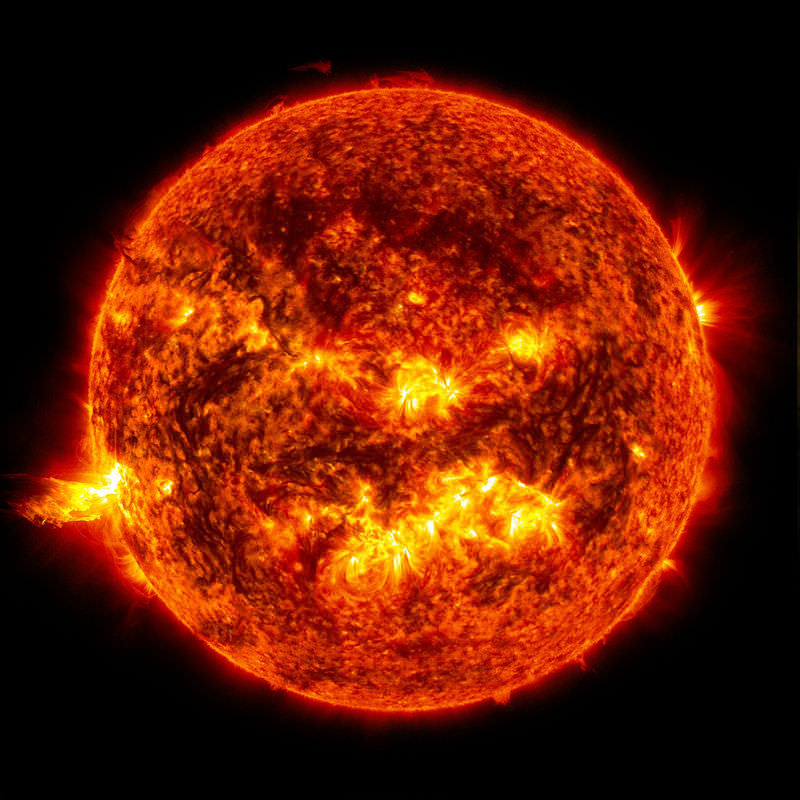
We have a main sequence star nearby. Our Sun is on the main sequence, classified as a yellow dwarf. Our Sun has been a main sequence star for about 5 billion years. As a medium-sized star, it will continue to shine for about 5 billion more years. Most stars are on the main sequence.
Main Sequence Stars
For most of a star’s life, hydrogen atoms fuse to form helium atoms. A star like this is a main sequence star. The hotter a main sequence star is, the brighter it is. A star remains on the main sequence as long as it is fusing hydrogen to form helium.
Classifying Stars by Color
The most common way of classifying main sequence stars is by color (Table below). Each class of star is given a letter, a color, and a range of temperatures. The letters don’t match the color names because stars were first grouped as A through O. It wasn't until later that their order was corrected to go by increasing temperature. When you try to remember the order, you can use this phrase: “Oh Be A Fine Good Kid, Man.”
| Class | Color | Temperature Range (degrees Kelvin) | Sample Star |
|---|---|---|---|
| O | Blue | >30,000 |
An artist’s depiction of the O class star Zeta Puppis. |
| B | Blue-white | 10,000–30,000 |
Computer generated image of Rigel, a Class B star. |
| A | White | 7,500–10,000 |
Sirius A is the brightest star that we see in the night sky. The dot on the right, Sirius B, is a white dwarf. |
| F | Yellowish-white | 6,000–7,500 |
There are two F class stars in this image, the supergiant Polaris A and Polaris B. What we see in the night sky as the single star “Polaris,” we also know as the North Star. |
| G | Yellow | 5,500–6,000 |
Our Sun: the most important G class star in the Universe, at least for humans. |
| K | Orange | 3,500–5,000 |
Arcturus is a Class K star that looks like the Sun but is much larger. |
| M | Red | 2,000–3,500 |
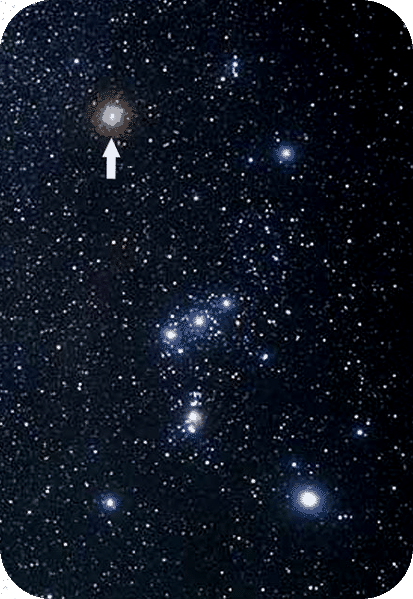
There are two types of Class M stars: red dwarfs and red giants. An artist’s depiction of a red dwarf star. Most stars are red dwarfs. The red supergiant Betelgeuse is seen near Orion’s belt. The blue star in the lower right is the Class B star Rigel. |
The surface temperature of most stars is due to their size. Bigger stars produce more energy, so their surfaces are hotter. But some very small stars are very hot. Some very big stars are cool.
Large stars burn through their supply of hydrogen very quickly. These stars “live fast and die young!” A very large star may only be on the main sequence for 10 million years. A very small star could remain on the main sequence for tens to hundreds of billions of years—far longer than the current age of our Universe.
Summary
- Stars spend most of their lives on the main sequence. These stars fuse hydrogen into helium for energy.
- Large main sequence stars may be hotter than small stars—but not always.
- Large stars are not on the main sequence as long as small stars.
Review
- What characteristic do all main sequence stars have?
- What are the characteristics of our Sun compared with other stars?
- What are the characteristics of large stars?
- What are the characteristics of small stars?
Explore More
Use the resource below to answer the questions that follow.
- What are main sequence stars converting?
- What process releases energy in these stars?
- What keeps these stars stable?
- What is the mass range of main sequence stars compared to our Sun?
Asked by Students
Overview
- Stars spend most of their lives on the main sequence. These stars fuse hydrogen into helium for energy.
- Large main sequence stars may be hotter than small stars—but not always.
- Large stars are not on the main sequence as long as small stars.
Notable Images
Vocabulary
Test Your Knowledge
The temperature of a yellow colored star ranges between _____.
7,500–10,000 K
10,000–30,000 K
3,500–5,000 K
5,500–6,000 K
| Class | Color | Temperature Range | Sample Star |
|---|---|---|---|
| O | Blue | 30,000 K or more | Zeta Ophiuchi |
| B | Blue-white | 10,000–30,000 K | Rigel |
| A | White | 7,500–10,000 K | Altair |
| F | Yellowish-white | 6,000–7,500 K | Procyon A |
| G | Yellow | 5,500–6,000 K | Sun |
| K | Orange | 3,500–5,000 K | Epsilon Indi |
| M | Red | 2,000–3,500 K | Betelgeuse, Proxima Centauri |
Betelgeuse, the star that marks one of the "shoulders" of Orion, is a ____________.
Bright, red, fairly cool star
Yellow star like our Sun
Bright, blue, very hot star
White dwarf
The red supergiant Betelgeuse is seen near Orion’s belt. The blue star in the lower right is the Class B star Rigel.
Asked by Students
Related Content

| Image | Reference | Attributions |
|---|---|---|
 | Credit: Courtesy of NASA Goddard Photo and Video Source: http://www.flickr.com/photos/gsfc/9103296900/ License: CC BY 2.0 | |
 | Credit: User:Kryptid/Wikipedia Source: http://commons.wikimedia.org/wiki/File:Zeta_Puppis.png License: Public Domain | |
 | Credit: Will Fox Source: http://commons.wikimedia.org/wiki/File:Rigel_blue_supergiant.jpg License: Public Domain | |
 | Credit: Courtesy of G. Bacon (STScI), NASA/ESA Source: http://commons.wikimedia.org/wiki/File:Sirius_A_and_B_artwork.jpg License: Public Domain | |
 | Credit: Courtesy of G. Bacon (STScI), NASA/ESA/HST Source: http://commons.wikimedia.org/wiki/File:Polaris_system.jpg License: Public Domain | |
 | Credit: Courtesy of NASA/SDO (AIA) Source: http://commons.wikimedia.org/wiki/File:The_Sun_by_the_Atmospheric_Imaging_Assembly_of_NASA%2527s_Solar_Dynamics_Observatory_-_20100819.jpg License: Public Domain | |
 | Credit: Windows to the Universe Source: http://www.windows2universe.org/the_universe/Arcturus.html&edu=high License: The copyright holder of this file allows anyone to use it for any purpose, provided that Windows to the Universe be referenced and/or linked to | |
 | Credit: Courtesy of Walt Feimer, NASA Source: http://commons.wikimedia.org/wiki/File:RedDwarfNASA.jpg License: Public Domain | |
 | Credit: Hubble European Space Agency/Akira Fujii, modified by User:Henrykus/Wikimedia Commons Source: http://commons.wikimedia.org/wiki/File:Betelgeuse_position_in_Orion.png License: Public Domain |
