





How is wine made?
You probably realize that grapes are needed to make wine. You might not realize, however, that yeast are also central in the process of making wine. Yeast take the sugars from the grapes and convert them into alcohol through the process of fermentation.
Fermentation
Sometimes cells need to obtain energy from sugar, but there is no oxygen present to complete cellular respiration. In this situation, cellular respiration can be anaerobic, occurring in the absence of oxygen. In this process, called fermentation, only the first step of respiration, glycolysis, occurs, producing two ATP; no additional ATP is produced. Therefore, the organism only obtains the two ATP molecules per glucose molecule from glycolysis. Compared to the 36-38 ATP produced under aerobic conditions, anaerobic respiration is not a very efficient process. Fermentation allows the first step of cellular respiration to continue and produce some ATP, even without oxygen.
Yeast (single-celled eukaryotic organisms) perform alcoholic fermentation in the absence of oxygen. The products of alcoholic fermentation are ethyl alcohol (drinking alcohol) and carbon dioxide gas. This process is used to make common food and drinks. For example, alcoholic fermentation is used to bake bread. The carbon dioxide bubbles allow the bread to rise and become fluffy. Meanwhile, the alcohol evaporates. In wine making, the sugars of grapes are fermented to produce wine. The sugars are the starting materials for glycolysis.
Animals and some bacteria and fungi carry out lactic acid fermentation. Lactic acid is a waste product of this process. Our muscles perform lactic acid fermentation during strenuous exercise, since oxygen cannot be delivered to the muscles quickly enough. Bacteria that produce lactic acid are used to make cheese and yogurt. The lactic acid causes the proteins in milk to thicken. Lactic acid also causes tooth decay, because bacteria use the sugars in your mouth for energy.
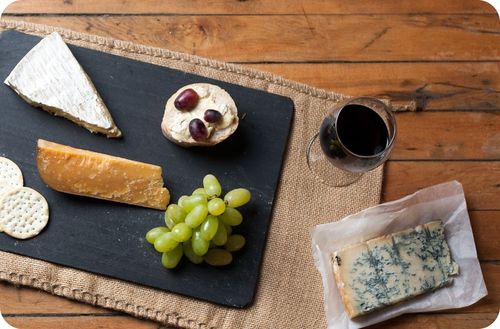
Pictured below are some products of fermentation (Figure below).
 [Figure2]
Gut Fermentation
Behind every fart is an army of gut bacteria undergoing some crazy biochemistry. These bacteria break down the remains of digested food through fermentation, creating gas in the process. Learn what these bacteria have in common with beer brewing at http://youtu.be/R1kxajH629A?list=PLzMhsCgGKd1hoofiKuifwy6qRXZs7NG6a.
Summary
- Fermentation happens in the absence of oxygen.
- Only the two ATP from glycolysis are produced under anaerobic conditions.
- Alcoholic fermentation and lactic acid fermentation are the two types of fermentation.
Explore More
Use the resource below to answer the questions that follow.
- Anaerobic Respiration at http://www.youtube.com/watch?v=s3MhJ7buOeA (2:01)
- Where in the cell does anaerobic respiration take place?
- What happens to pyruvate during anaerobic respiration? How does yeast differ from other organisms regarding the fate of pyruvate?
- How can glycolysis participate in anaerobic repiration?
- How much ATP is produced by the breakdown of pyruvate? How much ATP is produced overall by fermentation? Where does this ATP come from?
Review
- What is the difference between alcoholic fermentation and lactic acid fermentation?
- If an organism could make ATP from sugars with or without the presence of oxygen, which would be preferred and why?


