





How is the male reproductive system different from the female?
Humans have many organ systems controlling different functions of the body. Almost all systems are same in both males and females, they have the same organs and perform the same functions. One system that have different organs and different functions in males and females is the reproductive system. While in both sexes, its basic role is production of gametes and secretion of hormones, the organs that make up the reproductive systems is different and their specific functions are different. Males have a system that is designed in the production of gametes that are released from the body, while females have a system that is designed to grow and develop new individuals.
Male Reproductive System
The male reproductive system is a specialised system of organs that performs two main functions: secreting the male hormones (testosterone); producing male gametes (sperm) and delivering them to the site of fertilisation in the female body. To achieve this, the system includes organs that produce sperm and hormones, as well as ducts and glands that help transport and nourish sperm.
The formation of male gametes, known as sperm or spermatozoa, takes place in the testes (singular testis). The testes are a pair of oval-shaped organs located outside the abdominal cavity in a pouch of skin called the scrotum. This external position is essential because sperm formation requires a temperature slightly lower (2 to 3°C lower) than the normal body temperature(37°C). If the testes were inside the abdomen, the higher temperature would interfere with the proper development of sperm, which can lead to absence of sperm in such individual. Thus, the scrotum helps maintain an optimal temperature for sperm production and maturation.
 [Figure2]
In addition to producing sperm, the testes also secrete the male sex hormone testosterone. This hormone plays a crucial role in regulating spermatogenesis and is responsible for bringing about the physical and physiological changes seen in boys during puberty. These changes include deepening of the voice, growth of facial and body hair, an increase in muscle mass (this leads to more strength), and maturation of reproductive organs. Testosterone therefore ensures both the development of male reproductive capability and the appearance of secondary sexual characteristics.
Once sperm are produced in the testes, they need to be transported out of the body. This function is carried out by a long muscular tube called the vas deferens (or sperm duct). The sperm travel through the vas deferens. which later joins the urethra coming from the urinary bladder. This combined pathway runs through the penis and opens to the outside of the body. The urethra serves as a common passage for both urine and sperm mixed with fluids secreted by glands, although urine and sperm are not released at the same time.
As sperm move along the vas deferens and urethra, they receive secretions from accessory glands such as the seminal vesicles and the prostate gland. These secretions mix with the sperms to form a fluid known as semen. This fluid plays an important role by facilitating sperm movement and providing them with nourishment, particularly sugars that supply energy. The fluid also protect the sperm in the acidic environment of the female reproductive system. Without these secretions, sperm would not survive long or be able to move efficiently within the female reproductive tract.
Spermatozoa are very tiny (they are the smallest cells in the body). They are specialised cells adapted for fertilisation. Each sperm consists mainly of genetic material contained in the nucleus in the head and a long tail that helps it swim towards the female gamete, or ovum. The streamlined shape and tail movement enable sperm to travel through the female reproductive system, increasing the chances of successful fertilisation.
The male reproductive system functions as an integrated unit, ensuring the production of healthy sperm, their nourishment and their efficient delivery into the female reproductive system for reproduction, which is essential for the continuation of the human species.
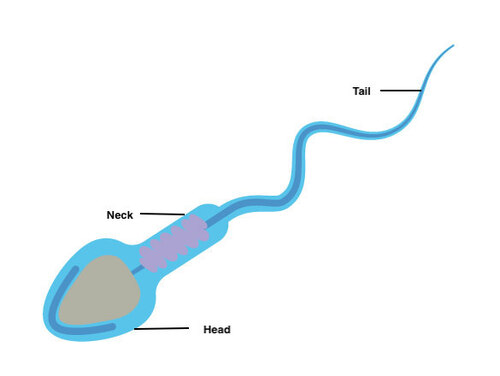 [Figure3]
Video: The Male Reproductive System of Human
- The male reproductive system produces male gametes (sperm) and transports them to the site of fertilisation.
- Sperm are produced in the testes, which are located in the scrotum, to maintain a temperature lower than the body temperature required for sperm production.
- The testes also secrete testosterone, a hormone responsible for sperm formation and the development of secondary sexual characteristics in boys during puberty.
- Sperm are transported from the testes through the vas deferens and released through the urethra outside the body, urethra acts as a common passage for urine and sperm.
- Secretions from the seminal vesicles and prostate gland form semen, which provides nourishment and helps in the movement of sperm.
- Sperm are specialised cells with a head containing genetic material and a tail that enables movement towards the female germ cell.
Review Questions on Male Reproductive System
- Why are the testes located outside the abdominal cavity in the scrotum?
- State two functions of the hormone testosterone in males.
- Describe the role of accessory glands in the male reproductive system.
- What is the path taken by sperm once they are formed in the testes?
- What is semen? What is its importane?
- Which part of the male reproductive system is also a part of another system?
- How is the structure of a sperm suited to its function in fertilisation?


