It's possible that you could wake up on Earth right now and still not recognize the planet. That's because of the incredible diversity of species. Habitats that you've never encountered would be inhabited by organisms that you've never seen or known about.
Modern Biodiversity
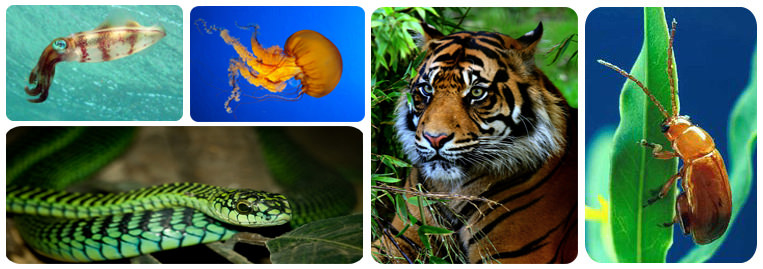
There are more than 1 million species of plants and animals known to be currently alive on Earth (Figurebelow) and many millions more that have not been discovered yet. The tremendous variety of creatures is due to the tremendous numbers of habitats that organisms have evolved to fill.
There is an amazing diversity of organisms on Earth. How do the organisms in this picture each make their living?
Adaptations
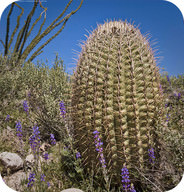
Many adaptations protect organisms from the external environment (Figurebelow).
Cacti have thick, water- retaining bodies that help them conserve water.
Other adaptations help an organism move or gather food. Reindeer have sponge-like hoofs that help them walk on snowy ground without slipping and falling. Hummingbirds have long, thin beaks that help them drink nectar from flowers. Organisms have special features that help them avoid being eaten. When a herd of zebras run away from lions, the zebras’ dark stripes confuse the predators so that they have difficulty focusing on just one zebra during the chase. Some plants have poisonous or foul-tasting substances in them that keep animals from eating them. Their brightly colored flowers serve as a warning.
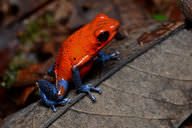
Poison dart frogs have toxins in their skin. Their bright colors warn potential predators not to take a bite!
Thousands of northern elephant seals — some weighing up to 4,500 pounds — make an annual migration to breed each winter at Año Nuevo State Reserve in California. Marine biologists are using high-tech tools to explore the secrets of these amazing creatures.
Summary
There are 1 million known species, but many more have not been discovered.
The enormous number of species is due to the tremendous variety of habitats.
Organisms have adaptations that help them to find food or avoid being eaten.
Review
What are the adaptations of the cactus to its desert environment?
What are the adaptations of poison dart frogs to their environment?
How does adaptation lead to biodiversity?
Explore More
Use this resource to answer the questions that follow.
What is biodiversity?
How does evolutionary history lead to biodiversity?
What are the five categories of values that say that biodiversity is important?
What is the negative value of biodiversity?
What is the Anthropocene?
What are the challenges presented by biodiversity decline?
Is it possible to be optimistic about biodiversity decline?
Notes/Highlights
Color
Highlighted Text
Notes
Please Sign In to create your own Highlights / Notes


 FlexiA FREE Digital Tutor for Every Student
 FlexBooks 2.0Customizable, digital textbooks in a new, interactive platform
 FlexBooksCustomizable, digital textbooks
 SchoolsFlexBooks from schools and districts near you
 Study GuidesQuick review with key information for each concept
 Adaptive PracticeBuilding knowledge at each student’s skill level
 SimulationsInteractive Physics & Chemistry Simulations
 PLIXPlay. Learn. Interact. eXplore.
 CCSS MathConcepts and FlexBooks aligned to Common Core
 NGSSConcepts aligned to Next Generation Science Standards
 Certified EducatorStand out as an educator. Become CK-12 Certified.
 WebinarsLive and archived sessions to learn about CK-12