What would have happened if CFCs had not been phased out?
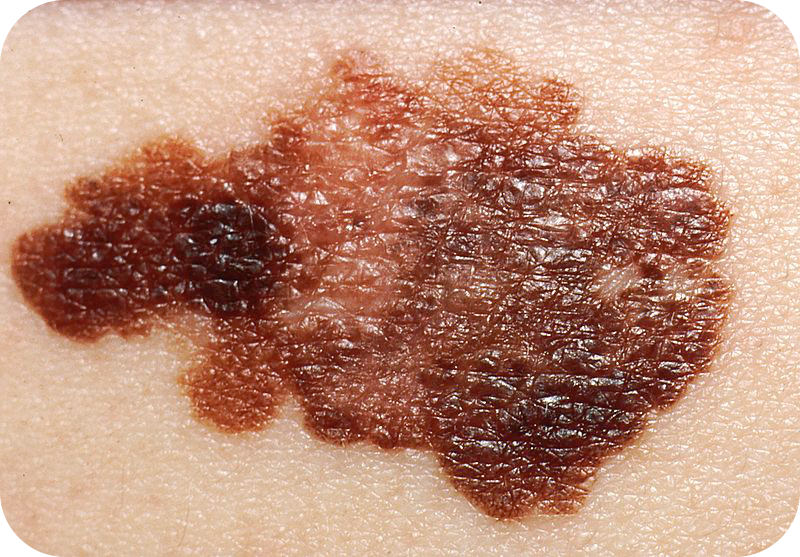
Had CFCs not been phased out, by 2050 there would have been 10 times more skin cancer cases than in 1980. The result would have been about 20 million more cases of skin cancer in the United States and 130 million cases globally.
Reducing Ozone Destruction
One success story in reducing pollutants that harm the atmosphere concerns ozone-destroying chemicals. In 1973, scientists calculated that CFCs could reach the stratosphere and break apart. This would release chlorine atoms, which would then destroy ozone. Based only on their calculations, the United States and most Scandinavian countries banned CFCs in spray cans in 1978.
More confirmation that CFCs break down ozone was needed before more was done to reduce production of ozone-destroying chemicals. In 1985, members of the British Antarctic Survey reported that a 50% reduction in the ozone layer had been found over Antarctica in the previous three springs.
The Montreal Protocol
Two years after the British Antarctic Survey report, the "Montreal Protocol on Substances that Deplete the Ozone Layer" was ratified by nations all over the world.
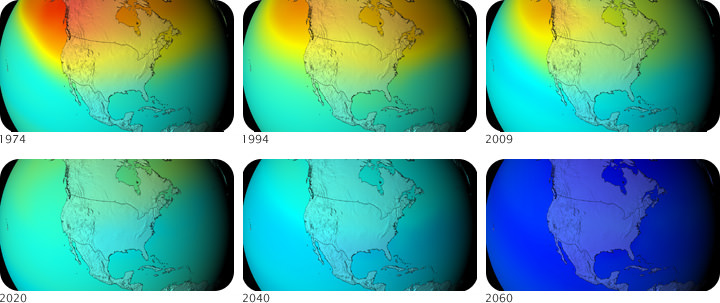
The Montreal Protocol controls the production and consumption of 96 chemicals that damage the ozone layer (Figurebelow). Hazardous substances are phased out first by developed nations and one decade later by developing nations. More hazardous substances are phased out more quickly. CFCs have been mostly phased out since 1995, although were used in developing nations until 2010. Some of the less hazardous substances will not be phased out until 2030. The Protocol also requires that wealthier nations donate money to develop technologies that will replace these chemicals.
Ozone levels over North America decreased between 1974 and 2009. Models of the future predict what ozone levels would have been if CFCs were not being phased out. Warmer colors indicate more ozone.
Since CFCs take many years to reach the stratosphere and can survive there a long time before they break down, the ozone hole will probably continue to grow for some time before it begins to shrink. The ozone layer will reach the same levels it had before 1980 around 2068 and 1950 levels in one or two centuries.
Summary
Calculations of ozone destruction prompted governments to ban some CFCs in 1978.
The Montreal Protocol protects the ozone layer by regulating the production and consumption of ozone-destroying chemicals.
Ozone levels continue to decrease, but the ozone hole will eventually begin to get smaller.
Review
How did mathematical calculations and observations of depletion of ozone over Antarctica prompt society to act to protect the ozone layer?
What is the Montreal Protocol?
Why doesn't the ozone hole repair itself now that CFCs are banned?
Explore More
Use this resource (watch up to 11:00) to answer the questions that follow:
What was the value of the ozone data collected by the British Antarctic Survey since the 1950s? What did Jonathan Shanklin do with this data?
What did Shanklin discover with this data?
What did the first pictures of the ozone layer look like from satellites?
Why is the fact that CFCs are non-reactive dangerous?
Why was the chemical destruction of ozone over Antarctica?
Why was the Montreal Protocol a landmark agreement?
What happened to ozone depleting substances by the mid-1990s?
What has happened to ozone depleting substances in the atmosphere since then?
What is the status of ozone depletion in the ozone layer? Has the hole healed?
What would have happened without the Montreal Protocol and there was no regulation of chlorine?
What would have happened with a much reduced ozone layer?
When will the ozone hole heal?
What is the relationship between ozone depleting substances and climate change?
What is the problem with hydrochlorofluorocarbons?
Notes/Highlights
Color
Highlighted Text
Notes
Please Sign In to create your own Highlights / Notes


 FlexiA FREE Digital Tutor for Every Student
 FlexBooks 2.0Customizable, digital textbooks in a new, interactive platform
 FlexBooksCustomizable, digital textbooks
 SchoolsFlexBooks from schools and districts near you
 Study GuidesQuick review with key information for each concept
 Adaptive PracticeBuilding knowledge at each student’s skill level
 SimulationsInteractive Physics & Chemistry Simulations
 PLIXPlay. Learn. Interact. eXplore.
 CCSS MathConcepts and FlexBooks aligned to Common Core
 NGSSConcepts aligned to Next Generation Science Standards
 Certified EducatorStand out as an educator. Become CK-12 Certified.
 WebinarsLive and archived sessions to learn about CK-12