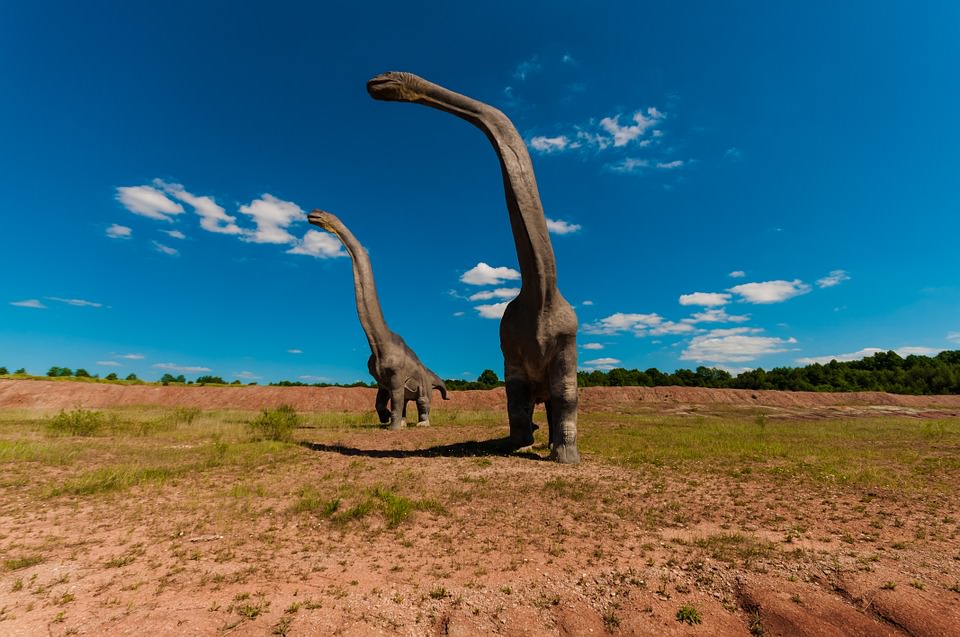
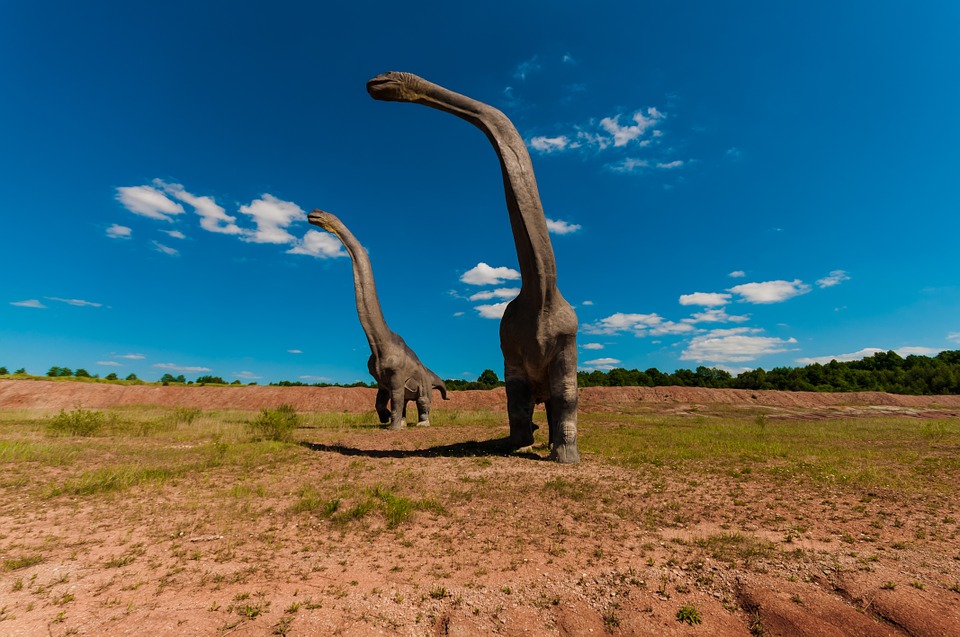
Dinosaurs lived a long time, geologically speaking, in part because the weather was favorable to them. Giant mammals lived during the ice ages because conditions were favorable. Earth's climate has been warmer and colder in Earth history, but mostly it's been warmer.
Climate Change in Earth History
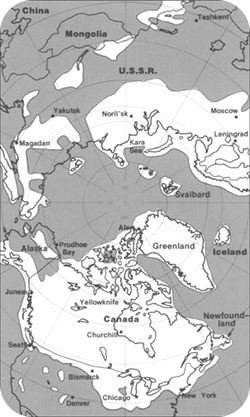
Climate has changed throughout Earth history. Much of the time Earth's climate was hotter and more humid than it is today, but climate has also been colder, as when glaciers covered much more of the planet. The most recent ice ages were in the Pleistocene Epoch, between 1.8 million and 10,000 years ago (Figurebelow). Glaciers advanced and retreated in cycles, known as glacial and interglacial periods. With so much of the world’s water bound into the ice, sea level was about 125 meters (395 feet) lower than it is today. Many scientists think that we are now in a warm, interglacial period that has lasted about 10,000 years.
The maximum extent of Northern Hemisphere glaciers during the Pleistocene epoch.
For the past 1500 years, climate has been relatively mild and stable when compared with much of Earth’s history. Why has climate stability been beneficial for human civilization? Stability has allowed the expansion of agriculture and the development of towns and cities.
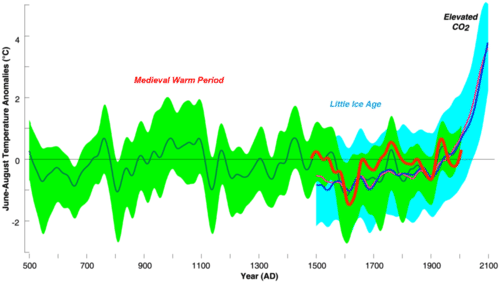
Fairly small temperature changes can have major effects on global climate. The average global temperature during glacial periods was only about 5.5oC (10oF) less than Earth’s current average temperature. Temperatures during the interglacial periods were about 1.1oC (2.0oF) higher than today (Figurebelow).
Since the end of the Pleistocene, the global average temperature has risen about 4oC (7oF). Glaciers are retreating and sea level is rising. While climate is getting steadily warmer, there have been a few more extreme warm and cool times in the last 10,000 years. Changes in climate have had effects on human civilization.
The Medieval Warm Period from 900 to 1300 A.D. allowed Vikings to colonize Greenland and Great Britain to grow wine grapes.
The Little Ice Age, from the 14th to 19th centuries, the Vikings were forced out of Greenland and humans had to plant crops further south.
The graph is a compilation of 5 reconstructions (the green line is the mean of the five records) of mean temperature changes. This illustrates the high temperatures of the Medieval Warm Period, the lows of the Little Ice Age, and the very high (and climbing) temperature of this decade.
Summary
Earth's climate has been warmer and colder, but mostly warmer, through Earth history.
For the past 2,000 years, when human society has really blossomed, climate has been relatively stable.
An increase in glaciers lowers sea level and a decrease in glaciers raises sea level.
Review
How has climate changed in the past 1,100 years?
What were the temperatures of the glacial and interglacial periods of the Pleistocene ice ages?
Why is the fact that climate has changed a lot during Earth history important to a discussion of climate change today?
Notes/Highlights
Color
Highlighted Text
Notes
Please Sign In to create your own Highlights / Notes


 FlexiA FREE Digital Tutor for Every Student
 FlexBooks 2.0Customizable, digital textbooks in a new, interactive platform
 FlexBooksCustomizable, digital textbooks
 SchoolsFlexBooks from schools and districts near you
 Study GuidesQuick review with key information for each concept
 Adaptive PracticeBuilding knowledge at each student’s skill level
 SimulationsInteractive Physics & Chemistry Simulations
 PLIXPlay. Learn. Interact. eXplore.
 CCSS MathConcepts and FlexBooks aligned to Common Core
 NGSSConcepts aligned to Next Generation Science Standards
 Certified EducatorStand out as an educator. Become CK-12 Certified.
 WebinarsLive and archived sessions to learn about CK-12