This gargoyle, on Notre Dame Cathedral in Paris, has pits and rounded edges, which are the results of acid rain. Acid rain damages statues and architecture in developed nations.
Acid Rain
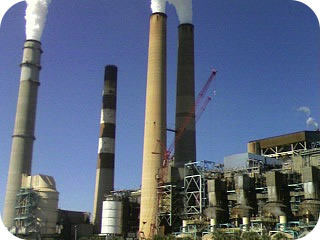
Acid rain is caused by sulfur and nitrogen oxides emanating from power plants or metal refineries. The smokestacks have been built tall so that pollutants don’t sit over cities (Figurebelow).
Tall smokestacks allow the emissions to rise high into the atmosphere and travel up to 1,000 km (600 miles) downwind.
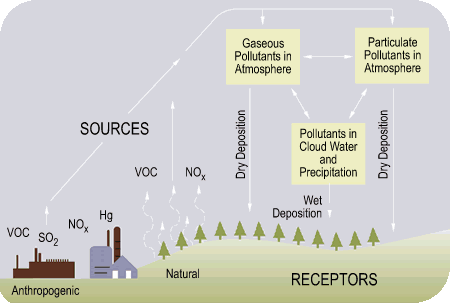
As they move, these pollutants combine with water vapor to form sulfuric and nitric acids. The acid droplets form acid fog, rain, snow, or they may be deposited dry. Most typical is acid rain (Figurebelow).
Pollutants are deposited dry or in precipitation.
pH and Acid Rain
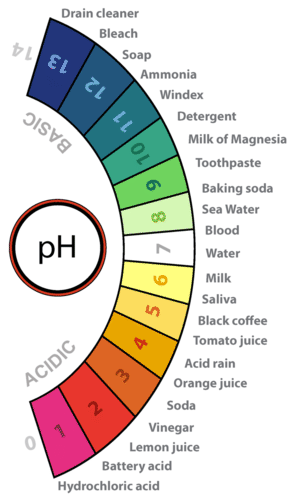
Acid rain water is more acidic than normal rain water. Acidity is measured on the pH scale. Lower numbers are more acidic and higher numbers are less acidic (also called more alkaline) (Figurebelow). Natural rain is somewhat acidic, with a pH of 5.6; acid rain must have a pH of less than 5.0. A small change in pH represents a large change in acidity: rain with a pH of 4.6 is 10 times more acidic than normal rain (with a pH of 5.6). Rain with a pH of 3.6 is 100 times more acidic.
A pH scale goes from 1 to 14; numbers are shown with the pH of some common substances. A value of 7 is neutral. The strongest acids are at the low end of the scale and the strongest bases are at the high end.
Regions with a lot of coal-burning power plants have the most acidic rain. The acidity of average rainwater in the northeastern United States has fallen to between 4.0 and 4.6. Acid fog has even lower pH with an average of around 3.4. One fog in Southern California in 1986 had a pH of 1.7, equal to toilet-bowl cleaner.
In arid climates, such as in Southern California, acids deposit on the ground dry. Acid precipitation ends up on the land surface and in water bodies. Some forest soils in the northeast are five to ten times more acidic than they were two or three decades ago. Acid droplets move down through acidic soils to lower the pH of streams and lakes even more. Acids strip soil of metals and nutrients, which collect in streams and lakes. As a result, stripped soils may no longer provide the nutrients that native plants need.
Effects of Acid Rain
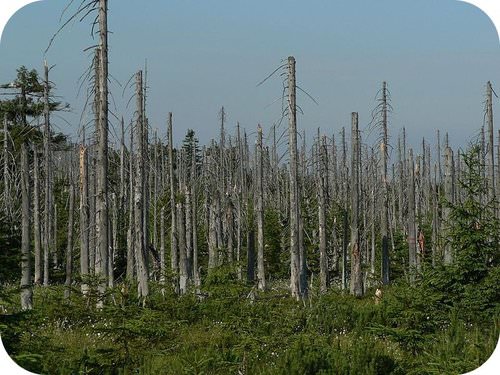
Acid rain takes a toll on ecosystems (Figurebelow). Plants that are exposed to acids become weak and are more likely to be damaged by bad weather, insect pests, or disease. Snails die in acid soils, so songbirds do not have as much food to eat. Young birds and mammals do not build bones as well and may not be as strong. Eggshells may also be weak and break more easily.
Acid rain has killed trees in this forest in the Czech Republic.
As lakes become acidic, organisms die off. No fish can live if the pH drops below 4.5. Organic material cannot decay, and mosses take over the lake. Wildlife that depend on the lake for drinking water suffer population declines.
Crops are damaged by acid rain. This is most noticeable in poor nations where people can’t afford to fix the problems with fertilizers or other technology.
Acid rain damages cultural monuments like buildings and statues. These include the U.S. Capitol and many buildings in Europe, such as Westminster Abbey.
Carbonate rocks neutralize acids and so some regions do not suffer the effects of acid rain nearly as much. Limestone in the midwestern United States protects the area. One reason that the northeastern United States is so vulnerable to acid rain damage is that the rocks are not carbonates.
Because pollutants can travel so far, much of the acid rain that falls hurts states or nations other than ones where the pollutants were released. All the rain that falls in Sweden is acidic and fish in lakes all over the country are dying. The pollutants come from the United Kingdom and Western Europe, which are now working to decrease their emissions. Canada also suffers from acid rain that originates in the United States, a problem that is also improving. Southeast Asia is experiencing more acid rain between nations as the region industrializes.
Summary
Nitrogen and sulfur compounds emitted high into the atmosphere create acids that later fall as acid rain.
Acidity is measured on a pH scale. Rain that is 5.0 or less on that scale is considered acid rain.
Acid rain weakens plants and animals and damages cultural treasures.
Review
Why do acids travel so far before they fall as acid rain?
Where does the acid that comes out of the atmosphere go?
What damage does acid rain do to organisms and cultural structures?
One problem with acid rain is that the pollutants that cause it may be emitted far upwind from where it falls in a different country. How can nations deal with this problem?
Vocabulary
termdefinition
alkalinealso called basic; substances that have a pH of greater than 7.0.
Notes/Highlights
Color
Highlighted Text
Notes
Please Sign In to create your own Highlights / Notes

 FlexiA FREE Digital Tutor for Every Student
 FlexBooks 2.0Customizable, digital textbooks in a new, interactive platform
 FlexBooksCustomizable, digital textbooks
 SchoolsFlexBooks from schools and districts near you
 Study GuidesQuick review with key information for each concept
 Adaptive PracticeBuilding knowledge at each student’s skill level
 SimulationsInteractive Physics & Chemistry Simulations
 PLIXPlay. Learn. Interact. eXplore.
 CCSS MathConcepts and FlexBooks aligned to Common Core
 NGSSConcepts aligned to Next Generation Science Standards
 Certified EducatorStand out as an educator. Become CK-12 Certified.
 WebinarsLive and archived sessions to learn about CK-12