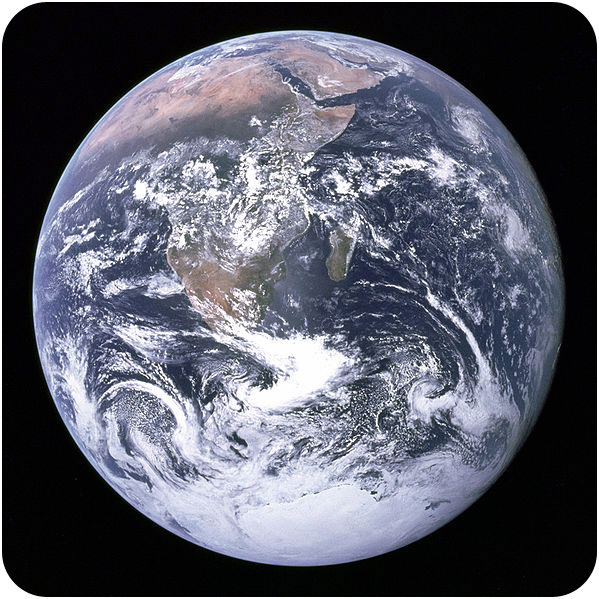
If science is the study of the natural world, what could be more obvious than to study the land, sky, water, and space, surrounding us?
Earth scientists seek to understand the beautiful sphere on which we live. Earth is a very large, complex system or set of systems, so most Earth scientists specialize in studying one aspect of the planet. Since all of the branches of Earth science are connected, these researchers work together to answer complicated questions. The major branches of Earth science are described below.
Geology
Geology is the study of the Earth’s solid material and structures and the processes that create them. Some ideas geologists might consider include how rocks and landforms are created or the composition of rocks, minerals, or various landforms. Geologists consider how natural processes create and destroy materials on Earth, and how humans can use Earth materials as resources, among other topics.
Geologists study rocks in the field to learn what they can from them.
Oceanography
Oceanography is the study of everything in the ocean environment, which covers about 70% of the Earth’s surface. Recent technology has allowed people and probes to venture to the deepest parts of the ocean, but much of the ocean remains unexplored. Marine geologists learn about the rocks and geologic processes of the ocean basins.
Climatology and Meteorology
Meteorology includes the study of weather patterns, clouds, hurricanes, and tornadoes. Using modern technology such as radars and satellites, meteorologists are getting more accurate at forecasting the weather all the time.
Climatology is the study of the whole atmosphere, taking a long-range view. Climatologists can help us better understand how and why climate changes (Figurebelow).
Carbon dioxide released into the atmosphere is causing the global climate to change.
Environmental Science
Environmental scientists study the effects people have on their environment, including the landscape, atmosphere, water, and living things. Climate change is part of climatology or environmental science.
Astronomy
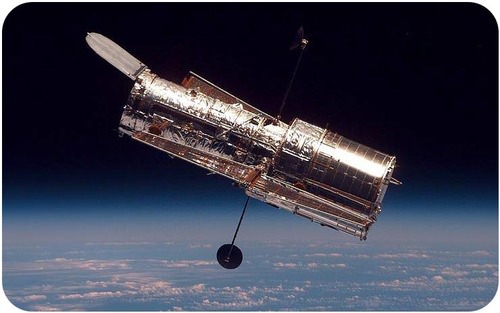
Astronomy is the study of outer space and the physical bodies beyond the Earth. Astronomers use telescopes to see things far beyond what the human eye can see. Astronomers help to design spacecraft that travel into space and send back information about faraway places or satellites (Figurebelow).
The Hubble Space Telescope.
Summary
The study of Earth science includes many different fields, including geology, meteorology, oceanography, and astronomy.
Each type of Earth scientist investigates the processes and materials of the Earth and beyond as a system.
Geology, climatology, meteorology, environmental science, and oceanography are important branches of Earth science.
Review
What type of Earth scientist would be interested in understanding volcanic eruptions on the seafloor?
If it were to snow in Phoenix in July, which type of Earth scientist would be most surprised?
If people have been studying the natural world for centuries or even millennia, why are scientists learning so much about Earth science now?
Explore More
Use this resource to answer the questions that follow.
What do Earth scientists do?
What are the major topics geoscientists study that impact humans?
What do geoscientists do that other scientists do?
Why do some geoscientists study Earth's interior?
What processes continually refines our understanding of Earth?
How does the general public learn about scientific advances?
Notes/Highlights
Color
Highlighted Text
Notes
Please Sign In to create your own Highlights / Notes


 FlexiA FREE Digital Tutor for Every Student
 FlexBooks 2.0Customizable, digital textbooks in a new, interactive platform
 FlexBooksCustomizable, digital textbooks
 SchoolsFlexBooks from schools and districts near you
 Study GuidesQuick review with key information for each concept
 Adaptive PracticeBuilding knowledge at each student’s skill level
 SimulationsInteractive Physics & Chemistry Simulations
 PLIXPlay. Learn. Interact. eXplore.
 CCSS MathConcepts and FlexBooks aligned to Common Core
 NGSSConcepts aligned to Next Generation Science Standards
 Certified EducatorStand out as an educator. Become CK-12 Certified.
 WebinarsLive and archived sessions to learn about CK-12