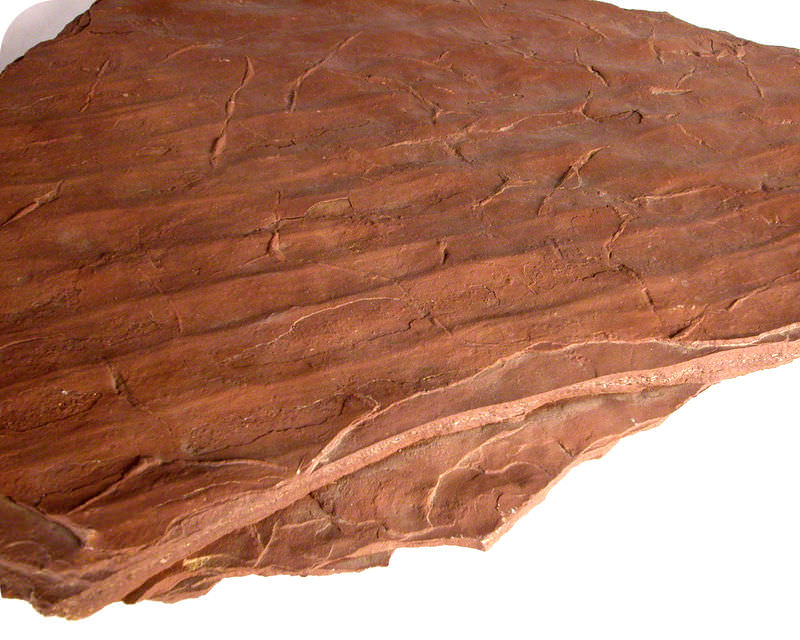
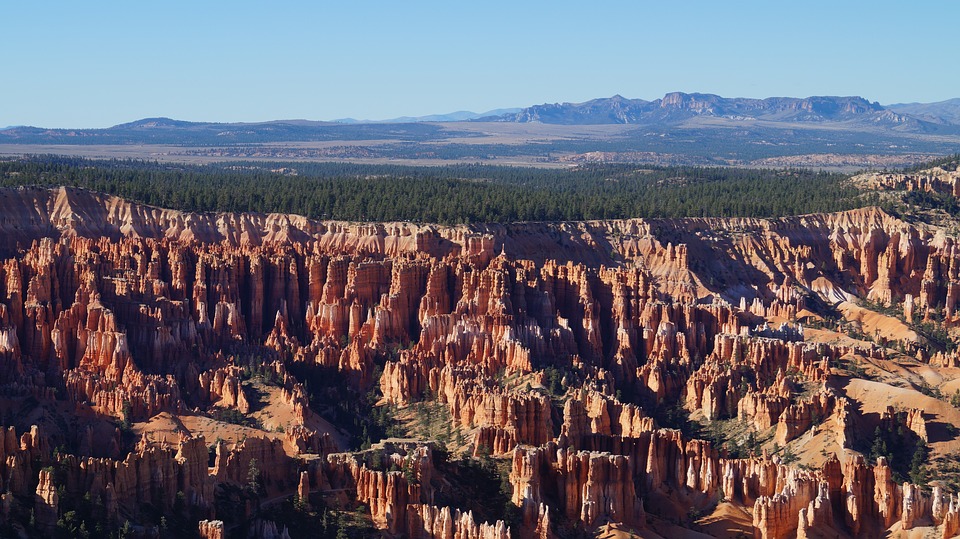
If you look closely at the rock you will see that it is made of sand-sized particles that have been lithified to create sandstone. The rock is eroding into very unique shapes, but these shapes are more likely to form from a rock made of small cemented together grains than from an igneous or metamorphic rock.
Types of Sedimentary Rocks
Sedimentary rock sizes and features
Rock
Sediment Size
Other Features
Conglomerate
Large
Rounded
Breccia
Large
Angular
Sandstone
Sand-sized
Siltstone
Silt-sized, smaller than sand
Shale
Clay-sized, smallest
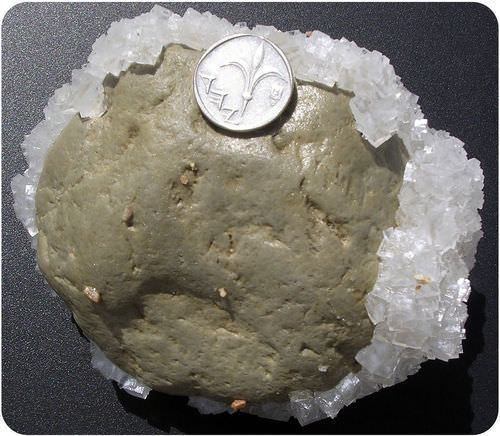
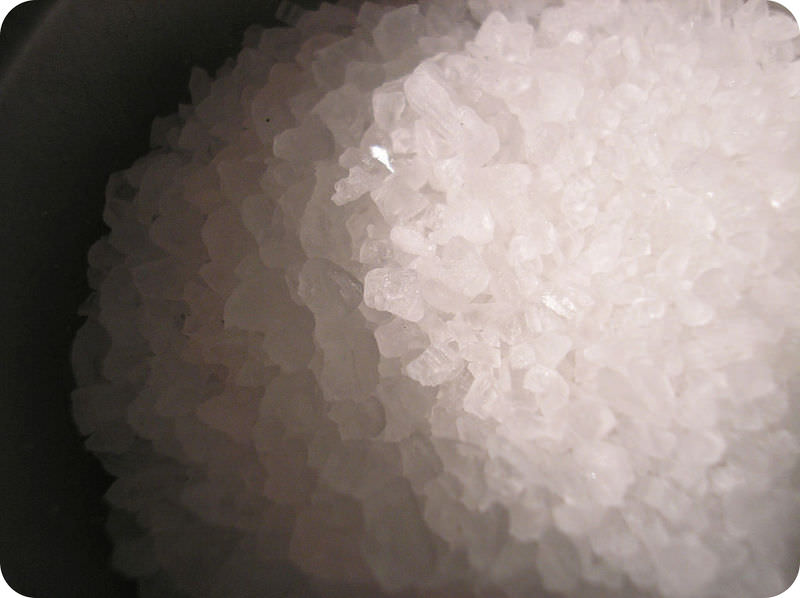
When sediments settle out of calmer water, they form horizontal layers. One layer is deposited first, and another layer is deposited on top of it. So each layer is younger than the layer beneath it. When the sediments harden, the layers are preserved. Sedimentary rocks formed by the crystallization of chemical precipitates are called chemical sedimentary rocks. As discussed in the concepts on minerals, dissolved ions in fluids precipitate out of the fluid and settle out, just like the halite in Figurebelow.
The evaporite, halite, on a cobble from the Dead Sea, Israel.
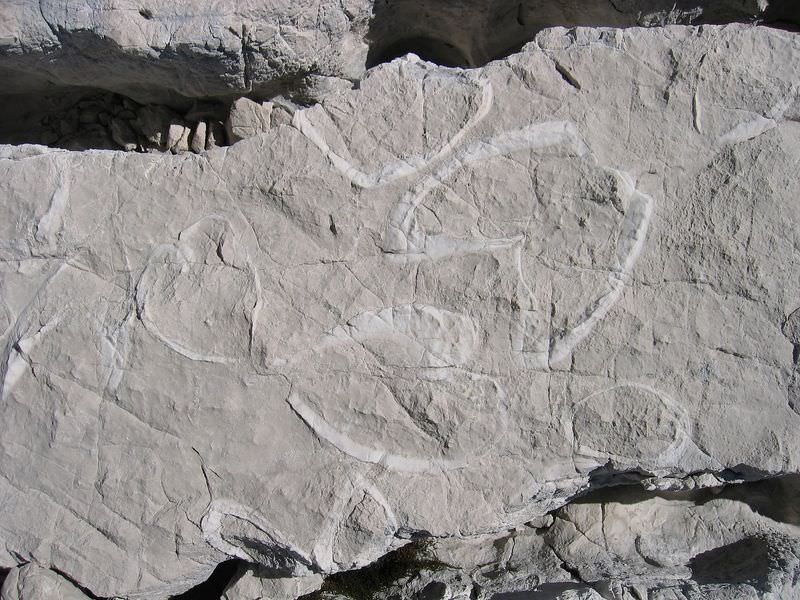
Biochemical sedimentary rocks form in the ocean or a salt lake. Living creatures remove ions, such as calcium, magnesium, and potassium, from the water to make shells or soft tissue. When the organism dies, it sinks to the ocean floor to become a biochemical sediment, which may then become compacted and cemented into solid rock (Figurebelow).
Fossils in a biochemical rock, limestone, in the Carmel Formation in Utah.
Tablebelow shows some common types of sedimentary rocks.
Common Sedimentary Rocks
Picture
Rock Name
Type of Sedimentary Rock
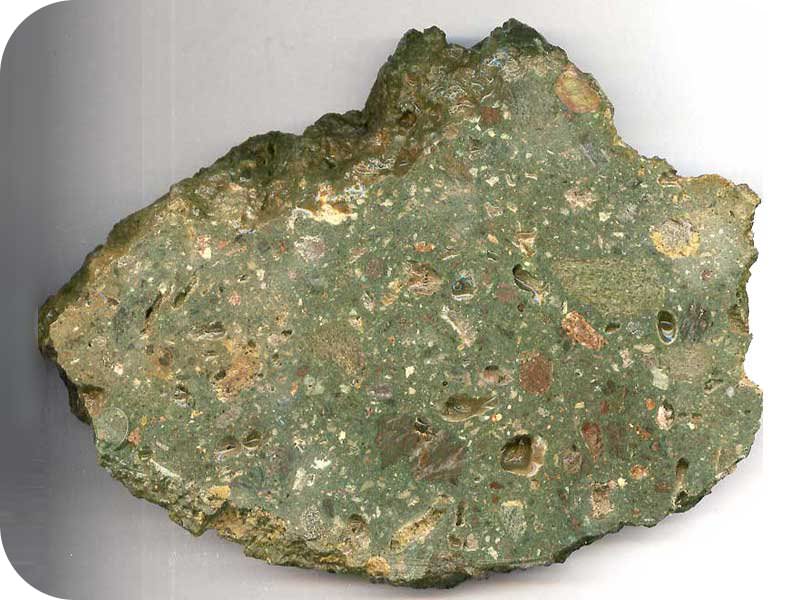
Conglomerate
Clastic (fragments of non-organic sediments)
Breccia
Clastic
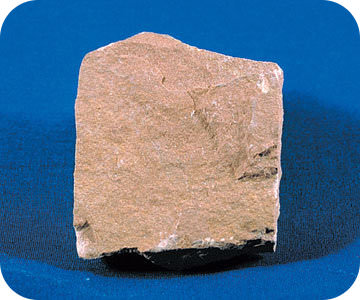
Sandstone
Clastic
Siltstone
Clastic
Shale
Clastic
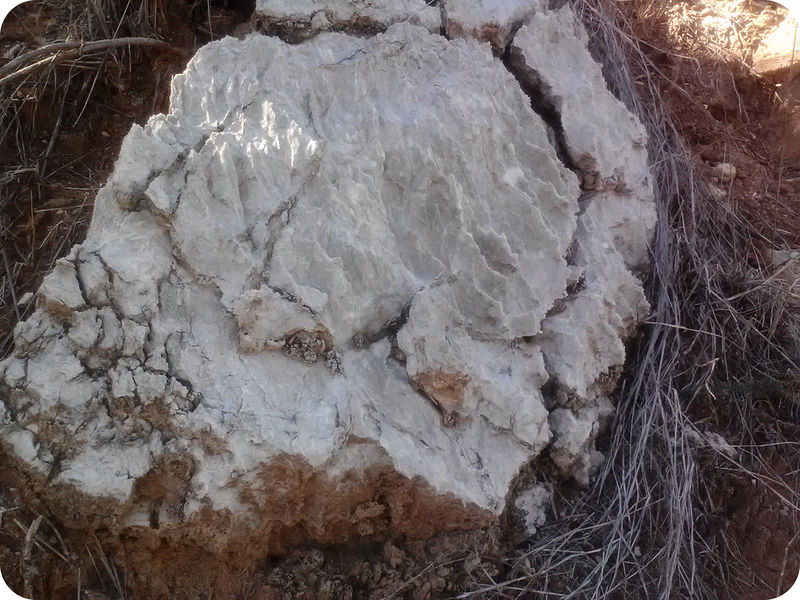
Rock Salt
Chemical precipitate
Rock Gypsum
Chemical precipitate
Dolostone
Chemical precipitate
Limestone
Bioclastic (sediments from organic materials, or plant or animal remains)
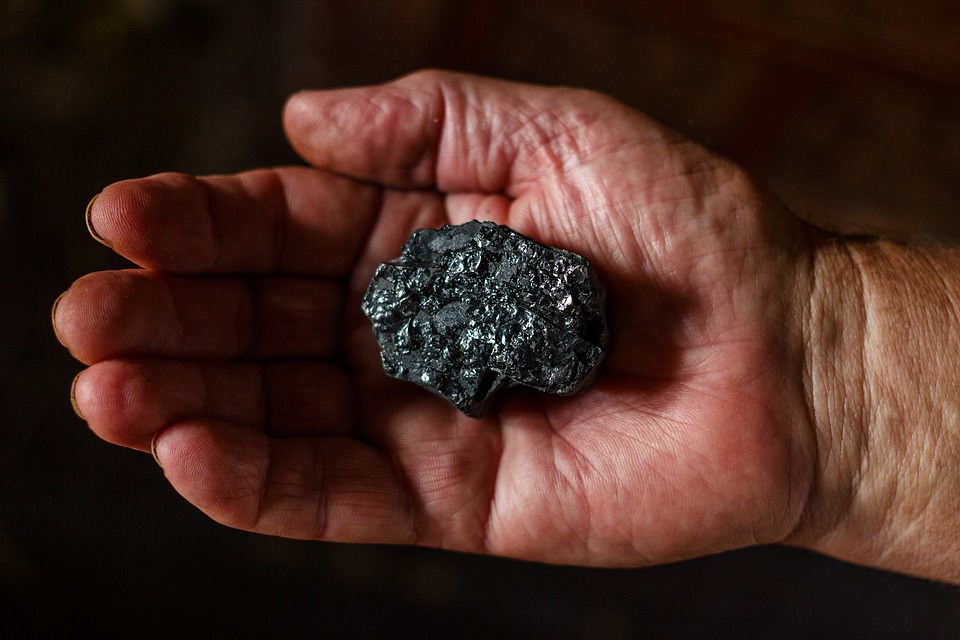
Coal
Organic
Summary
Sediments settle out of water in horizontal layers.
Sedimentary rocks are classified based on how they form and on the size of the sediments, if they are clastic.
Clastic sedimentary rocks are formed from rock fragments, or clasts; chemical sedimentary rocks precipitate from fluids; and biochemical sedimentary rocks form as precipitation from living organisms.
Review
How does an organism become a sedimentary rock?
How do chemical sedimentary rocks differ from clastic sedimentary rocks?
What are the different sedimentary rock types based on grain size, from small to large?
Explore More
Use this resource to answer the questions that follow.
What are the three types of sedimentary rocks.
What is the first type he talks about and what are they made of?
Name and describe the first type of clastic sedimentary rocks that he talks about.
Name and describe the second type of clastic sedimentary rocks that he talks about.
Name and describe the third type of clastic sedimentary rocks that he talks about.
What is the 2nd type of sedimentary rock that he talks about? How does he make one of these types of rocks?
What are two other chemical sedimentary rocks?
What is the third type of sedimentary rock? What is their feature?
How does lignite form? How about bituminous and anthracite coal?
What is limestone that is formed by marine skeletons or coral called? Although it is chemical, it is also what?
NOTES / HIGHLIGHTS
Please Sign In to create your own Highlights / Notes
Vocabulary
termdefinition
biochemical sedimentary rocksrocks that form from materials created by living organisms removing ions from water and falling to the bottom to become sediments.
chemical sedimentary rocksrocks that form from the hardening of chemical precipitates.
Notes/Highlights
Color
Highlighted Text
Notes
Please Sign In to create your own Highlights / Notes


 FlexiA FREE Digital Tutor for Every Student
 FlexBooks 2.0Customizable, digital textbooks in a new, interactive platform
 FlexBooksCustomizable, digital textbooks
 SchoolsFlexBooks from schools and districts near you
 Study GuidesQuick review with key information for each concept
 Adaptive PracticeBuilding knowledge at each student’s skill level
 SimulationsInteractive Physics & Chemistry Simulations
 PLIXPlay. Learn. Interact. eXplore.
 CCSS MathConcepts and FlexBooks aligned to Common Core
 NGSSConcepts aligned to Next Generation Science Standards
 Certified EducatorStand out as an educator. Become CK-12 Certified.
 WebinarsLive and archived sessions to learn about CK-12