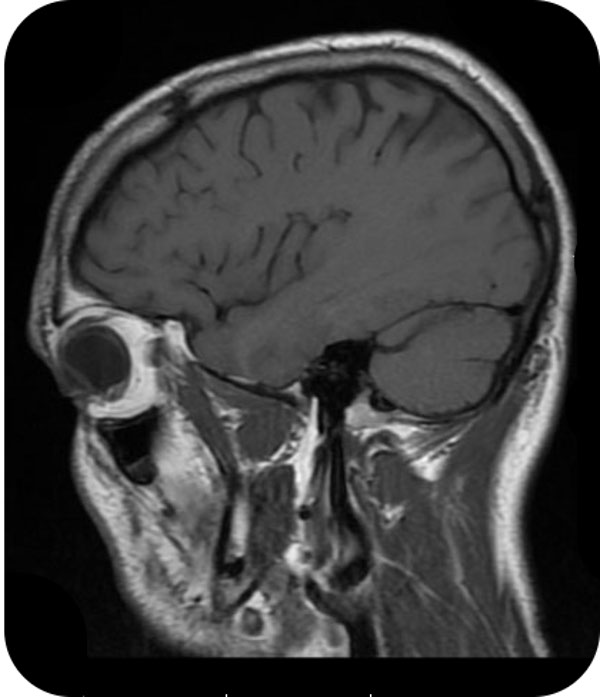
Just as a medical doctor uses an MRI, CT scan, or x-ray to see inside a patient's body, seismologists use wave energy to learn about Earth's interior. The difference is that the doctor can run the energy through the patient at any time. Scientists need to wait for an earthquake to get information about Earth's interior.
Waves
Energy is transmitted in waves. Every wave has a high point called a crest and a low point called a trough. The height of a wave from the center line to its crest is its amplitude. The distance between waves from crest to crest (or trough to trough) is its wavelength. The parts of a wave are illustrated in Figurebelow.
The crest, trough, and amplitude are illustrated in this diagram.
Earthquake Waves
The energy from earthquakes travels in waves. The study of seismic waves is known as seismology. Seismologists use seismic waves to learn about earthquakes and also to learn about the Earth’s interior.
One ingenious way scientists learn about Earth’s interior is by looking at earthquake waves. Seismic waves travel outward in all directions from where the ground breaks and are picked up by seismographs around the world. Two types of seismic waves are most useful for learning about Earth’s interior.
Body Waves
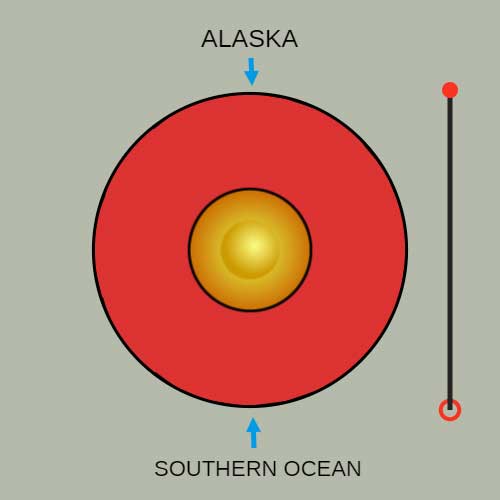
P-waves and S-waves are known as body waves because they move through the solid body of the Earth. P-waves travel through solids, liquids, and gases. S-waves only move through solids (Figurebelow). Surface waves only travel along Earth's surface. In an earthquake, body waves produce sharp jolts. They do not do as much damage as surface waves.
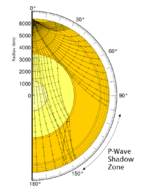
P-waves (primary waves) are fastest, traveling at about 6 to 7 kilometers (about 4 miles) per second, so they arrive first at the seismometer. P-waves move in a compression/expansion type motion, squeezing and unsqueezing Earth materials as they travel. This produces a change in volume for the material. P-waves bend slightly when they travel from one layer into another. Seismic waves move faster through denser or more rigid material. As P-waves encounter the liquid outer core, which is less rigid than the mantle, they slow down. This makes the P-waves arrive later and further away than would be expected. The result is a P-wave shadow zone. No P-waves are picked up at seismographs 104o to 140o from the earthquakes focus.
How P-waves travel through Earth’s interior.
S-waves (secondary waves) are about half as fast as P-waves, traveling at about 3.5 km (2 miles) per second, and arrive second at seismographs. S-waves move in an up and down motion perpendicular to the direction of wave travel. This produces a change in shape for the Earth materials they move through. Only solids resist a change in shape, so S-waves are only able to propagate through solids. S-waves cannot travel through liquid.
Earth's Interior
By tracking seismic waves, scientists have learned what makes up the planet’s interior (Figurebelow).
P-waves slow down at the mantle core boundary, so we know the outer core is less rigid than the mantle.
S-waves disappear at the mantle core boundary, so we know the outer core is liquid.
Letters describe the path of an individual P-wave or S-wave. Waves traveling through the core take on the letter K.
Surface Waves
Surface waves travel along the ground, outward from an earthquake’s epicenter. Surface waves are the slowest of all seismic waves, traveling at 2.5 km (1.5 miles) per second. There are two types of surface waves. The rolling motions of surface waves do most of the damage in an earthquake.
Summary
P-waves arrive first to a seismograph because they are faster. They travel through solids, liquids, and gases.
S-waves arrive second to a seismograph, and they only travel through solids.
The behavior of P- and S-waves indicates that the outer core is liquid.
Review
What are the properties of P-waves?
What are the properties of S-waves?
How do scientists use seismic waves to learn about Earth's interior?
Vocabulary
termdefinition
amplitudeheight of a wave; this can be measured from a center line to the top of the crest, or to the bottom of the trough.
body wavea type of seismic wave that travels through the body of a planet; body waves include primary waves and secondary waves.
crestthe highest point of a wave.
seismologythe study of seismic waves including earthquakes and the Earth's interior.
surface wavecombined transverse longitudinal wave that travels along the surface of a medium.
troughthe lowest point of a wave.
wavelengthhorizontal distance from wave crest to wave crest, or wave trough to wave trough.
Notes/Highlights
Color
Highlighted Text
Notes
Please Sign In to create your own Highlights / Notes


 FlexiA FREE Digital Tutor for Every Student
 FlexBooks 2.0Customizable, digital textbooks in a new, interactive platform
 FlexBooksCustomizable, digital textbooks
 SchoolsFlexBooks from schools and districts near you
 Study GuidesQuick review with key information for each concept
 Adaptive PracticeBuilding knowledge at each student’s skill level
 SimulationsInteractive Physics & Chemistry Simulations
 PLIXPlay. Learn. Interact. eXplore.
 CCSS MathConcepts and FlexBooks aligned to Common Core
 NGSSConcepts aligned to Next Generation Science Standards
 Certified EducatorStand out as an educator. Become CK-12 Certified.
 WebinarsLive and archived sessions to learn about CK-12